392, El Niño and the Case for Local Resilience

Forecasters are warning that the developing El Niño could become a very strong event by the end of 2026, with its effects continuing into the spring of 2027.

El Niño occurs when unusually warm water develops across the tropical Pacific Ocean. This changes atmospheric circulation and can affect weather patterns around the world. It does not provide a precise forecast for any particular part of Britain, but it can alter the likelihood of storms, heavy rain and other extremes.

The article published by MSN and The Independent suggests that Britain could experience a wetter and stormier autumn and winter. This would follow an exceptionally hot and dry summer which has already placed water supplies, farming, wildlife and infrastructure under considerable pressure.

The important lesson is not that we know exactly what the coming winter will bring. We do not. It is that the weather appears to be becoming less dependable.

A disturbance arriving from afar

El Niño is a reminder that no locality is isolated from the natural systems of the wider world. A change in the temperature of the Pacific Ocean can eventually affect rainfall, food production and prices in Britain.

The direct effect on British weather may be uncertain, but the indirect effects could be considerable. Droughts and floods in food-exporting countries may reduce supplies of rice, tea, coffee, citrus fruit and other products upon which Britain has become dependent.

Modern supply chains have been designed for efficiency rather than resilience. Food may travel thousands of miles and pass through numerous processors, warehouses and distribution centres before reaching a local shop. A failure in any part of the system can be transmitted rapidly to consumers.

In an expanding economy, shortages can sometimes be overcome by purchasing supplies elsewhere. In a shrinking economy, characterised by high energy costs, debt and declining discretionary spending, that option becomes progressively less affordable.

From prediction to preparation

The national response will probably concentrate upon forecasts, emergency plans and the protection of major infrastructure. These are necessary, but they cannot provide every household and locality with security.

Localism begins with a different question. It does not ask whether an extreme event can be prevented. It asks whether a locality can continue to provide its essentials when the event occurs.

A resilient locality would know:

  • which roads and properties are vulnerable to flooding;
  • which residents may need help during power cuts or severe weather;
  • where emergency shelter and warmth could be provided;
  • which buildings have independent heating or electricity;
  • where local food stocks are held;
  • which farms, growers, shops and kitchens could cooperate during a disruption; and
  • who possesses useful equipment, vehicles and practical skills.

Much of this knowledge already exists informally. The task is to reconnect it.

Water must be managed locally

The possibility of heavy winter rain following summer drought demonstrates one of the contradictions of the present system. A locality may experience water shortage and flooding within a few months of each other.

Rainwater is rushed from roofs, roads and fields into drains and rivers. It may then contribute to flooding before disappearing downstream. Later, the same locality may be asked to restrict its water use.

A more local approach would retain water in the landscape. Ponds, restored wetlands, water butts, small reservoirs, permeable surfaces, healthy soils and carefully managed woodland could slow runoff and provide reserves for dry periods.

Flood protection and drought preparation should therefore be treated as parts of the same local water policy.

Food security begins before the shortage

Local food production cannot replace every imported product. Nor does localism require every locality to become completely self-sufficient. It does mean increasing the proportion of essential food which can be grown, processed, stored and distributed reasonably close to where it is consumed.

That might include vegetables, fruit, eggs, dairy products, meat, flour and preserved foods. Local mills, bakeries, dairies, cold stores and community kitchens may eventually become as important as the farms themselves.

Production must also become more varied. A single large crop may be efficient in a normal year but vulnerable to drought, flooding or disease. A mixture of crops, varieties and farming methods provides insurance which cannot always be measured by immediate financial return.

The shrinking economy increases the danger

Extreme weather is occurring while the country is becoming less able to maintain its complicated infrastructure.

Flood defences, reservoirs, electricity networks, roads, sewers and emergency services all require large and continuing expenditure. Governments may promise investment, but much of their available revenue is already committed to debt interest, pensions, health care and other unavoidable costs.

Infrastructure can therefore become less reliable at the very time when the climate is placing greater demands upon it.

Local resilience cannot replace national infrastructure. It can, however, reduce the consequences when national systems are temporarily overwhelmed. A building with stored water, a wood stove, some local electricity and a supply of food is less vulnerable than one which depends entirely upon continuous deliveries through distant networks.

Localism is practical insurance

El Niño will eventually fade, as every El Niño does. The vulnerabilities it exposes will remain.

The lesson is not that Britain should withdraw from the world. It is that necessities should not depend entirely upon distant systems which local people cannot control.

A locality that retains water, produces some of its food, maintains local skills and knows how to organise itself will be better prepared for storms, droughts, power cuts and economic contraction. These arrangements also strengthen everyday life when no emergency is occurring.

Localism is therefore more than an economic response to the end of growth. It is a form of practical insurance against a world in which both the weather and the economy are becoming less predictable.

379. When Drought Becomes Normal: What Gardens and Farming Must Become

The usual response to drought is to wait for rain. We protect what we can, watch the forecast and hope that next year will be better.

But suppose the conditions we have recently experienced become a recurring feature of life. Suppose dry springs and hot summers repeatedly interrupt the growing season. What should we do differently?

This is already a practical question. The Environment Agency’s report for 14–20 August 2026 recorded drought across 71 per cent of England’s land area. Recent rain had not restored normal conditions. Reservoir storage remained below average, and many rivers were running low. Environment Agency drought report

We need not assume that every future summer will be identical. The useful planning assumption is that prolonged water shortages will return often enough to change how we garden, farm and organise our food supply.

On that assumption, restoring everything to its previous condition after each drought makes little sense. We need to use each drought to discover what must change.

Begin with the land

Our first question should not be how to obtain more water. It should be how to make better use of the water that arrives.

A garden or farm needs to be understood as a particular place. Where does rain run off? Where does it soak in? Which ground stays moist longest? Which slopes dry first? Where do wind and reflected heat make matters worse?

These differences should guide what we grow and where we grow it.

We have often treated drainage as an unquestioned improvement. Yet land must now cope with both excessive rain and prolonged dryness. Getting water away quickly in winter can conflict with keeping enough for summer.

The aim should be to slow unnecessary runoff, encourage infiltration where appropriate and provide safe routes for surplus water. Ponds, planted margins and carefully designed water storage may have a place. But reshaping land is not a universal remedy. Soil, slope, buildings and neighbouring land all matter. A poorly placed bank or pond can create another problem.

We should begin by observing, then make changes that suit the ground.

The garden must change its expectations

The garden of the future can remain beautiful. But beauty may need to depend less on constant watering.

A green lawn throughout a dry summer should cease to be a requirement. Established grass often recovers when rain returns. Plants that repeatedly struggle in a particular position should prompt reconsideration rather than an annual rescue operation.

The Royal Horticultural Society recommends choosing plants for the soil, shade and exposure of the site. It also stresses that plants may need to tolerate wet winters as well as dry summers. Simply filling a garden with Mediterranean plants is not an answer for every British soil. RHS drought-resistant gardening

There is a place for fewer small pots, less thirsty seasonal bedding and more permanent planting suited to local conditions. Flowers still matter. So do insects, birds and the pleasure of sitting outside. Adaptation need not mean turning every garden into a vegetable plot or a gravel yard.

Where food is grown, however, scarce water should have a clear purpose. A manageable area of productive ground may be more useful than a large vegetable plot that cannot be maintained through six dry weeks.

This is especially important where age, disability or limited time restrict the work people can do. The best design is one that can actually be looked after.

Soil care becomes water care

Compost, suitable mulches and protection from unnecessary compaction deserve more attention than emergency watering alone.

Organic matter can improve soil structure and water retention. Mulching helps reduce evaporation. These are among the RHS’s central recommendations for using less water in gardens. They work best as continuing practices, rather than measures introduced after plants have begun to fail. RHS watering advice

But we should not make extravagant promises. Improved soil does not manufacture rain. Even carefully managed ground will eventually dry during a sufficiently long drought.

The purpose is to give plants a better chance and make available water last longer.

For food growing, this also means trying different varieties and sowing dates, keeping records and spreading risks. A single successful season proves little. What matters is which crops give a useful harvest across several difficult years.

Store water on a useful scale

A water butt is a beginning. It is not necessarily a summer water supply.

The arithmetic helps. Ten millimetres of rain falling on a roof of 100 square metres amounts to 1,000 litres before collection losses. But applying the equivalent of that same rainfall to 100 square metres of vegetable ground also requires 1,000 litres.

A modest tank can therefore fill quickly and empty quickly.

Storage should be planned around the area to be watered, the crops being protected and the likely length of a dry spell. Roofs on houses, sheds and farm buildings deserve attention. So do covered tanks, sound gutters and arrangements that minimise waste.

At farm scale, the Agriculture and Horticulture Development Board identifies storage and irrigation efficiency as important parts of protecting crop water supplies. AHDB water supply guidance

Yet storage has costs. Tanks, reservoirs, pipes and pumps require money, materials and maintenance. In a shrinking economy, the useful question is not simply what can be built. It is what can remain affordable to operate and repair.

Gravity may help where the site permits. Shared storage may help where holdings are close together. Neither removes the need to establish what water is actually available.

Farming for difficult years

A farm planned around an average year may become increasingly exposed if average conditions rarely arrive.

The objective should shift towards maintaining useful production through a succession of difficult seasons. That may mean more varied rotations, trials of different crops and varieties, improved soil management and a closer match between production and dependable water supplies. AHDB identifies these approaches as important responses to changing conditions on arable farms. AHDB climate adaptation guidance

For livestock farms, drought is a problem of drinking water and fodder together. Feeding winter reserves during summer merely moves part of the shortage forward. Defra’s recent account describes reduced grass growth, pressure on forage and stressed water supplies. Defra drought guidance

Where such conditions recur, stocking levels must be reconsidered against what the land can support in poor years. Maintaining numbers through repeated purchases of expensive feed may become untenable.

Different grazing mixtures, shelter and changed management may help on suitable land. None should be presented as a cure that works everywhere. Local trials and farmers’ experience will matter more than a fashionable prescription.

Localism must include water

Local food production offers opportunities, but it does not escape the weather.

If every garden, smallholding and farm in a locality suffers the same drought, being local is not enough. A useful local food system needs several forms of production, workable water arrangements, storage of harvested food and links with other places.

Localism should therefore mean greater local capability, not complete isolation.

Neighbours could share growing records, propagate plants that have performed well and organise composting. Landowners could make suitable ground available to growers. Farms and households could develop reliable trading relationships rather than meeting only through distant supply chains.

Some localities may be able to organise shared equipment or water storage. Others may find that their greatest contribution is processing and preserving seasonal surpluses.

Such arrangements will not appear automatically. Access to land, money, skills and physical help will determine who can participate. People without gardens must not be excluded from the benefits.

There is still a national responsibility

Households cannot compensate for failing public infrastructure with buckets.

Reliable public water supplies, leakage reduction, agricultural research and protection of rivers remain collective responsibilities. Local adaptation needs a functioning national framework.

Nor should access to water be settled solely by purchasing power. Drinking water, sanitation, food production and living rivers are fundamental needs. If scarcity becomes persistent, choices between competing uses must be made openly.

The danger is that adaptation becomes something prosperous households and well financed businesses can buy, while everyone else experiences higher food prices and fewer options.

A serious response must address that inequality.

What should happen next?

When rain returns, the work should begin rather than stop.

Gardens and farms should record what survived, what failed and where moisture remained. The next planting season should reflect those observations. Storage should be assessed before the next dry spell. Crops, cultivated areas and livestock numbers should be considered against realistic water and labour budgets.

At locality level, the first step could be a simple conversation between growers, farmers, landowners and residents: what can this place reliably produce, what prevents it, and what could we do together?

The deeper change is in our expectations. We cannot assume that enough water, energy and money will always be available to maintain any pattern of land use we choose.

If drought becomes normal, gardens and farming must be organised around the limits of the places they occupy.

That is also a foundation of localism: learning what a locality can sustain, caring for the resources it has, and building everyday life around that knowledge.

369. Gardening for a Hotter Britain

Building the Localist Landscape

The recent heatwaves are not an isolated event. They are part of a trend. Whether one attributes them mainly to climate change, natural climatic variation or a combination of influences, the practical conclusion is the same. Britain is becoming warmer, summer droughts are becoming more frequent, and water can no longer be treated as an unlimited resource.

For those embracing localism this is not simply another gardening challenge. It is an opportunity to redesign our homes, farms and localities to become more resilient.

The traditional English garden evolved during centuries when summer rainfall was usually dependable. The future may demand something closer to Mediterranean thinking, while still respecting Britain’s winter rainfall and occasional cold spells.

The objective changes from growing plants that need watering to creating landscapes that rarely need it.

Water is the New Currency

Every drop of water becomes valuable.

Instead of asking how we can water more efficiently, we should first ask why water is needed at all.

Healthy soils rich in organic matter can hold several times more water than depleted soils. Deep-rooted plants survive long dry periods because they reach moisture unavailable to shallow-rooted species.

Rain that falls during winter should be regarded as income saved for summer.

The localist approach is therefore:

  • Build soil rather than buy fertiliser.
  • Capture rainfall rather than extract groundwater.
  • Grow drought-resistant plants rather than thirsty ones.
  • Shade the ground rather than leave bare soil exposed.

Rethinking the Land

Perhaps the greatest mistake is assuming the existing landscape should remain unchanged.

For generations fields have been flattened, hedges removed, streams straightened and water drained away as quickly as possible.

The future may require the opposite.

Land should increasingly be shaped to slow water.

This may include:

  • shallow swales following contours
  • ponds connected by overflow channels
  • small reservoirs
  • terraces on slopes
  • restored hedgerows
  • shelter belts of trees
  • wetlands in unsuitable corners

Instead of flooding in winter and drought in summer, rainfall can remain within the landscape for months.

Every farm becomes a water storage system.

Every garden becomes a miniature watershed.

The Soil Comes First

Soil is Britain’s greatest water reservoir.

Adding compost, leaf mould, well-rotted manure and wood chips greatly increases water retention.

Bare soil should become rare.

Mulches reduce evaporation dramatically while suppressing weeds.

No-dig methods disturb soil organisms less and allow fungi and earthworms to build underground channels that carry water deep below the surface.

Healthy soil feeds healthy plants.

Choosing Food Crops

Future gardens may contain fewer thirsty vegetables and more reliable crops.

Good choices include:

  • broad beans
  • climbing beans
  • peas (early season)
  • onions
  • garlic
  • shallots
  • beetroot
  • chard
  • kale
  • spinach beet
  • Jerusalem artichokes
  • globe artichokes
  • squash
  • pumpkins
  • courgettes
  • sweetcorn where moisture is available
  • herbs such as rosemary, thyme, sage, oregano and lavender

Perennial vegetables deserve renewed attention because their deep roots tolerate drought better than annual crops.

Examples include:

  • asparagus
  • rhubarb
  • sea kale
  • Good King Henry
  • sorrel
  • perennial onions

Many traditional Mediterranean vegetables may become easier to grow than they once were.

Grain and Protein

Smallholders should consider crops that provide calories rather than simply vegetables.

These may include:

  • field beans
  • peas
  • oats
  • rye
  • barley
  • heritage wheats suited to local conditions

Local milling and baking become increasingly valuable community skills.

Fruit Trees for Tomorrow

Fruit trees remain among the wisest long-term investments.

However, species and rootstocks deserve careful thought.

Deep-rooted trees generally outperform shallow-rooted bushes during drought.

Reliable choices include:

  • apples
  • pears
  • quinces
  • mulberries
  • walnuts
  • sweet chestnuts
  • medlars

Some traditionally southern species may become increasingly successful.

These include:

  • figs
  • apricots
  • peaches in sheltered sites
  • almonds in favourable districts

Olives may eventually become practical in southern Britain, although severe winters will occasionally remain a risk.

Young trees need watering while establishing themselves.

Once mature they should survive with little assistance.

Around each tree the ground should remain permanently mulched.

Grass should not be allowed right up to the trunk.

Soft Fruit

Soft fruit can struggle during prolonged drought.

Nevertheless:

  • blackcurrants
  • gooseberries
  • autumn raspberries
  • blackberries
  • jostaberries

remain worthwhile if mulched well.

Blueberries require acidic soils and regular moisture and may become increasingly difficult without irrigation.

Flowers Still Matter

Localism is not only about survival.

Beauty strengthens community life.

Flowers celebrate births, weddings, anniversaries, harvest festivals and remembrance.

The future garden should still provide abundance.

Reliable drought-tolerant flowers include:

  • lavender
  • echinacea
  • yarrow
  • verbena bonariensis
  • gaura
  • rudbeckia
  • cosmos
  • salvia
  • sedum
  • eryngium
  • agapanthus
  • helenium

Traditional cottage garden flowers can still flourish if planted into improved soil and deeply mulched.

Many herbs provide both flowers and food for pollinating insects.

Flowers for the Home

Cut flowers should become part of everyday local life rather than an imported luxury.

Grow plants with long vase life.

Excellent choices include:

  • dahlias
  • zinnias
  • snapdragons
  • sweet peas where moisture allows
  • sunflowers
  • chrysanthemums
  • asters
  • statice
  • strawflowers for drying

Dried flowers may regain popularity because they require no refrigeration or constant replacement.

Seasonal arrangements using grasses, seed heads, berries and dried stems celebrate the changing year.

Pollinators Become Essential Workers

Without insects there is little fruit.

Gardens, farms and roadside verges should provide nectar throughout the growing season.

Avoid sterile ornamental plants.

Allow some wild corners.

Accept that perfect tidiness may become the enemy of resilience.

Greenhouses Must Change

The traditional greenhouse becomes increasingly difficult to manage.

Summer temperatures above 45°C may become common inside.

Plants stop growing.

Pollination fails.

Water demand soars.

Future greenhouses may need:

  • external shading
  • removable shade cloth
  • white reflective coatings
  • roof ventilation
  • side ventilation
  • solar-powered extraction fans
  • rainwater-fed irrigation
  • thermal mass such as water tanks
  • grape vines trained over roofs
  • deciduous shade trees nearby

Some growers may discover that a shade house is more useful than a greenhouse during midsummer.

Water Harvesting

Every roof should become a catchment.

Rainwater tanks should become normal.

Overflow should feed ponds.

Grey water from baths and showers may irrigate trees where regulations and suitable biodegradable products allow.

At community level, local reservoirs and ponds may become as important as village halls.

Farms of the Future

Large monocultures become increasingly vulnerable.

Mixed farming offers greater resilience.

Livestock return nutrients to the soil.

Trees provide shelter.

Hedges reduce drying winds.

Agroforestry may become one of Britain’s most productive farming systems.

The farm becomes a living ecosystem rather than a factory.

Learning from the Mediterranean

Many regions around the Mediterranean have survived dry summers for thousands of years.

Their lessons include:

  • white buildings reflecting heat
  • courtyards creating cool spaces
  • thick walls storing coolness
  • shaded outdoor living
  • drought-tolerant crops
  • water stored through winter
  • planting for shade before ornament

Britain need not copy these exactly, but their underlying principles are increasingly relevant.

Communities Working Together

No household needs to face these challenges alone.

Neighbouring gardens can exchange seeds.

Smallholders can share equipment.

Villages can establish communal orchards.

Local nurseries can propagate plants already adapted to local conditions.

Seed saving becomes a valuable community activity.

Knowledge becomes every bit as important as water.

A New Vision

The localist garden of the future may look different from today’s.

There will be more trees, deeper soils, fewer lawns, more mulch, more shade and more perennial plants.

There will be ponds where there were once dry corners.

There will be fruit where there were once ornamental shrubs.

The landscape will hold water rather than shed it.

Above all, it will work with nature instead of constantly struggling against it.

That is the deeper lesson of a hotter Britain. Localism is not simply about living closer to home. It is about reshaping the places where we live so they become capable of sustaining us through whatever climate the future may bring.

342. Sinking Ground and the Case for Localism

Recent reports from the British Geological Survey have drawn attention to a growing problem affecting large parts of London and the South East of England. The issue is often described in the press as “houses sinking”, though this is misleading. The buildings are not falling into holes. What is happening is more gradual and more revealing. The ground itself is moving.

Much of the area is built on clay soils, particularly London Clay. These soils behave in a predictable but increasingly disruptive way. In wet periods they expand, and in dry periods they contract. As climate patterns become more erratic, with longer dry spells and more intense rainfall events, the movement becomes more pronounced. The result is subsidence, slow distortion of buildings, cracking, and increasing repair costs.

The scale is not small. Large numbers of properties are now considered at risk over coming decades, and insurers are already paying out substantial sums in dry years when ground shrinkage is at its worst. This is not a future possibility but an ongoing adjustment in the relationship between climate, soil, and the built environment.

From a localist perspective, this is not simply an engineering or insurance issue. It is a sign of structural imbalance in how settlement has developed.

A central feature of modern development in the United Kingdom has been concentration. Population, investment, infrastructure, and housing demand have been drawn disproportionately towards London and its surrounding areas. Over time this has produced extreme density and pressure on land systems that were never intended to carry such sustained load at such scale.

Localism begins from a different assumption. It treats land, soil, water, and climate as active parts of a locality rather than neutral surfaces waiting for development. Each place has limits that are not just legal or economic but physical and ecological. Clay soils that swell and shrink are one such limit. They are not defects to be engineered away indefinitely, but conditions to be respected in how and where building takes place.

The subsidence issue shows what happens when that principle is ignored over time. The more activity is concentrated, the more intensively land is used, and the more heavily infrastructure is layered onto a single geological setting, the more stress is placed on the underlying system. Climate change then acts as a multiplier, increasing the variability of moisture and exposing weaknesses that were previously managed by more stable conditions.

Seen in this light, the “sinking houses” narrative is not about collapse but about feedback. The land is responding to patterns of settlement that have become too concentrated and too uniform. It is a physical reminder that growth is not abstract and that location always matters.

A localist response would not treat this as a problem to be solved only through deeper foundations, stronger materials, or more insurance adjustment. Those have a place, but they are secondary. The primary question is where and how we build in the first place. If development were more evenly distributed across smaller localities, with greater sensitivity to ground conditions and environmental limits, the pressure on any one system would be reduced.

There is also a financial dimension. Concentration creates hidden long-term costs. Subsidence damage, drainage failure, and repeated repair work are not incidental. They are the accumulated cost of ignoring local conditions at the planning stage. These costs eventually return to households, insurers, and public systems, often at far greater expense than a more distributed pattern of settlement would have required.

In this sense, the issue is not only about housing stability but about the wider model of development. A system that continually draws activity into a few high-pressure areas will eventually encounter physical limits, even if those limits appear slowly.

Localism offers a different direction. It suggests that resilience comes not from forcing uniform solutions onto diverse ground conditions, but from allowing development to reflect the character of each locality. In doing so, it reduces strain on land, reduces long-term cost, and builds a more stable relationship between people and place.

The movement of clay beneath London is therefore more than a geological curiosity. It is a quiet signal that the balance between settlement and land has been disturbed. The question it raises is whether that balance is restored by further concentration and engineering, or by a more distributed and locally grounded pattern of living.

334. Human Energy is Our Most Precious Resource

One of the least recognised consequences of a shrinking economy is that human energy becomes as valuable as financial energy. Every hour spent, every physical effort made, every journey undertaken, has to produce genuine value.

For decades we have built a society that consumes enormous quantities of human effort simply to maintain systems that have become increasingly complex. Endless commuting, administration, shopping, maintenance and bureaucracy all absorb time and strength that could be used to improve our own lives and those of our neighbours.

The recent idea of “slow gardening” illustrates an important principle. Rather than constantly battling nature, the aim is to design gardens that largely look after themselves. By choosing appropriate plants, allowing natural processes to operate and accepting that perfection is neither possible nor desirable, far less human effort is required while producing healthier and more attractive spaces.

Localism applies exactly the same principle to society itself.

Instead of requiring people to spend large amounts of time travelling, dealing with distant organisations and maintaining complicated supply chains, localism designs society so that much of everyday life happens close to home. Food is grown locally. Skills are shared locally. Care is provided locally. Decisions are made locally. Problems are solved before they grow into major crises.

This is not about making people work harder. Quite the opposite. It is about using human energy far more intelligently.

Every unnecessary journey eliminated saves fuel and time. Every locally repaired item avoids replacement. Every neighbour helping another reduces the need for expensive professional services. Every local enterprise reduces dependence upon distant systems.

As economic contraction continues, conserving human energy will become just as important as conserving fuel or materials. People will simply no longer have the surplus time or physical capacity to support highly centralised systems that demand constant travel, administration and consumption.

Like the slow garden, a localist society works with natural human relationships instead of against them. It creates communities that are resilient because they require less effort to sustain.

The future may not belong to those who can command the greatest resources. It may belong to those who can achieve the greatest quality of life with the least expenditure of human energy.

319. Village Life in 1600 Revisited – What We Have Learned Since Then. Excluding Industrial Knowledge

If we look back at English village life around 1600, it is easy to see it as distant and simple. Yet if we set aside the industrial story that followed, and instead add what we have learned about health, ecology, governance, and human wellbeing since then, a different picture emerges. It is not a return to the past, but an understanding of what village life contained that later systems overlooked or displaced.


A village in 1600 was not designed, it evolved. It functioned as a local system tied closely to soil, water, animals, and seasons. People lived within limits that were immediately visible. The boundaries of the locality were not administrative, they were physical and practical.

What we now understand better is that such systems had strong ecological logic:

  • Nutrients were largely recycled locally through animals, composting, and human labour
  • Food systems were seasonal and therefore naturally varied
  • Energy use was low, local, and mostly biological rather than mechanical
  • Waste rarely travelled far from its source

Modern ecological thinking confirms something important here. These systems were not efficient in a modern economic sense, but they were often resilient in the sense that they could absorb shocks without total collapse.


Health and the hidden balance of diet and movement

We now know far more about nutrition, hygiene, and disease transmission than people in 1600 could possibly have known. Yet when we apply this knowledge retrospectively, we see an interesting pattern.

Village diets were:

  • High in fibre from grains and vegetables
  • Low in processed sugar and refined fats
  • Dependent on seasonal variation rather than constant supply

Physical activity was:

  • Continuous and necessary
  • Spread across all ages and genders
  • Integrated into daily life rather than separated into exercise

We now understand that many chronic conditions associated with modern life are strongly linked to sedentary behaviour and processed diets. This does not make 1600 healthier in all respects, infectious disease and infant mortality were severe, but it does suggest that the structure of daily life had some inherent protective qualities that were later lost.


Local governance before abstraction

The 1600 village was governed through layered local systems: manor custom, parish responsibility, informal agreement, and church oversight. While not democratic in the modern sense, it was deeply local in practice.

What we have learned since is that governance works most effectively when:

  • Decision-making is close to the consequences
  • Responsibility and resource are aligned at the same scale
  • Rules evolve from lived experience rather than abstract design

Modern systems often separate decision from consequence. In contrast, village governance concentrated both in the same place. This created inequality and limitation, but it also created accountability at a human scale.


Knowledge without external dependency

One of the most important differences between then and now is not technology, but dependence on external systems of knowledge.

In 1600:

  • Skills were transmitted directly through apprenticeship and family life
  • Knowledge was embedded in practice rather than written abstraction
  • Repair, making, and maintenance were normal daily functions

What we have learned since is that systems become fragile when knowledge is centralised and separated from use. Modern research in resilience shows that distributed knowledge systems, where many people hold partial but usable skills, are often more stable under disruption.

The village was such a system by necessity.


Time, season, and human scale

Modern life often treats time as continuous and uniform. In 1600, life was strongly seasonal and cyclical. Work followed daylight, weather, and agricultural need.

We now understand that human wellbeing is strongly influenced by:

  • Exposure to natural light cycles
  • Variation in activity rather than constant intensity
  • Periods of rest built into the year rather than scheduled around productivity

The village calendar embedded these patterns naturally. The modern world often removes them and then tries to reintroduce them artificially.


What was missing then, and what we now know must be added back carefully

It would be misleading to idealise 1600 village life. There were serious limitations:

  • High infant mortality
  • Limited medical understanding
  • Social hierarchy and constraint
  • Vulnerability to harvest failure and disease

What we have learned since must therefore be added carefully:

  • Clean water systems and sanitation
  • Medical knowledge and basic public health
  • Better structural housing safety
  • Shared emergency response capacity

These are genuine gains that should not be discarded.


A combined understanding for localism

If we remove the industrial detour from the story, what remains is not nostalgia, but a design question.

A localist interpretation of village life suggests:

  • Small-scale systems can be ecologically coherent
  • Work, knowledge, and responsibility function best when locally connected
  • Human wellbeing is strongly tied to seasonal rhythm and physical engagement
  • Resilience depends on distributed capability rather than central dependency

But modern knowledge also adds non-negotiable improvements:

  • Health protection must be formalised
  • Water, sanitation, and shelter standards must be higher
  • Vulnerable people require structured support systems

The task is not to recreate 1600, but to recognise that it contained a coherent local logic that modern systems often fragment. Localism, in this sense, is not a step backwards, but a re-alignment of scale, knowledge, and responsibility with human and ecological reality.

263. Humans and Forests: An Entangled Relationship

Humans and Forests: An Entangled Relationship View this email in your browser

MuseLetter #396 / March 2026 by Richard Heinberg Share Tweet Forward Read current MuseLetter online | Download printable PDF version here (PDF, 199 KB) The Future of Forests Our species’ origin and destiny are entangled with the roots and branches of trees. We evolved in and around trees, and we’ve learned to breed and plant them for their fruit, nuts, wood, and blossoms, taking their seeds with us as we migrated—hence the English walnut, native to Persia, and the Georgia peach, native to China. It’s a relationship that has carried us around the globe, often in boats or carts made from trees.

While human communities have benefitted immensely from trees, tree communities (i.e., forests) haven’t always fared so well in the bargain. In this article, we’ll trace the ups and downs of this relationship and inquire why it has grown more one-sidedly abusive in recent decades. Unsurprisingly, many recent challenges to the health of forests have emerged because of climate change—even as forests are proving to be one of the planet’s primary climate-stabilizing systems.

Finally, we’ll explore what we can do to defend and restore forests in the face of global warming and other threats. Along the way, we’ll dip into some of the most intriguing recent scientific findings about trees and forests. The Ghosts of Forests Past During recent millennia, the world’s forests have changed in size, composition, and sometimes location. Consider central Europe: During glacial times, the region was mostly treeless; but starting about 10,000 years ago, with higher temperatures and melting ice came the flourishing of dense oak, lime, and hazel forests, forming a mosaic pattern across the landscape. During this period, human settlements gradually expanded, adding farms, gardens, and pastures to the mosaic. As centuries passed, and as agriculture and metal smelting proliferated, more trees were cut for wood, for fuel, and to clear land for planting annual crops and for pasturing animals. Forests contracted and sometimes expanded according to human priorities. However, by the 16th century, holznot (German for “wood shortage”) had become a persistent problem—one that contributed to the widespread adoption of coal and, later, other fossil fuels. Today the ancient central European forest is nearly gone, and its remnants are under threat.

North America saw a similar evolution. In 1800, the region of what is now the southeastern United States was covered by a vast, 93-million-acre expanse of old-growth longleaf pine stretching from Virginia to
Texas. This arboreal ecosystem had been carefully tended for centuries by Native peoples, who used managed burning to create clearings among towering, fire-adapted trees. Early explorers recorded extraordinary plant and animal biodiversity in a dense, mature silvan landscape. But by 1820 the forest was facing rapid clearing for settlement, agriculture, and roads, a process that accelerated greatly with the advent of steam locomotives, which initially burned wood for fuel while also lugging timber to distant cities.  

Altogether, nearly one-third of the world’s forests have been lost over the last 10,000 years, with forest cover on habitable land shrinking from 57 percent to 38 percent (forests formerly covered 40 percent of Earth’s total land surface, while today they cover 30 percent). The pace of loss accelerated greatly in the last century, with half of all historic deforestation occurring after 1900.


Figure source: OurWorldInData.org, (CC-BY) Hannah Ritchie and Max Roser, 2025.

Although global deforestation rates peaked in the 1980s and later slowed, they remain high, especially in tropical regions, due to logging and agriculture. But, in the current century, a new threat is emerging that could result in the loss of over half the area of the world’s remaining forests by 2100 from wildfire, drought, flood, and heat stress. Forests as Climate Victims Recent research suggests that climate change will have a range of impacts on forests, most of them destructive. It’s widely understood that tree species that have adapted to conditions prevalent over the past few thousand years will need to migrate toward the poles to thrive in a warmer world. However, forests are lagging up to 200 years behind the necessary rate of migration, raising the prospect of widespread forest collapse. Further, the composition of most forests is shifting toward faster-growing, less resilient tree species. A 2020 study showed that forests are becoming younger and shorter—largely due to the climate crisis but also to the human introduction of non-native trees—and this is reducing their overall carbon storage capacity. They’re also becoming simpler, populated by fewer species. Unfortunately, the species that appear to be losing out are ones that grow more slowly and anchor forest ecosystems, supporting diverse webs of life—especially in the tropics, where biodiversity is highest. When fast-growing trees dominate a forest, storms, drought, and pests can cause more damage. Slower-growing, long-lived trees often have deeper roots, sturdier trunks, and denser wood that help forests resist drought and pests. Further, pollinator insects, birds, and mammals are often adapted to slow-growing trees.

Finally, due to climate change and shifts in forest composition, wildfires are getting worse, currently burning more than twice as much tree cover annually as they did 20 years ago. Carbon emissions from forest fires increased by 60 percent globally between 2001 and 2023, with boreal forest emissions nearly tripling, according to NASA research. Particularly in the tropics, forests are facing tipping points where they may become carbon sources rather than sinks due not just to wildfires but also intensified droughts and reduced soil carbon stability.  Forests as Climate Heroes As all this is happening, we are learning more about forests’ role in stabilizing the global climate. Trees provide shade, cool the local environment through transpiration, moderate global water cycles, and remove carbon from the atmosphere. Through these four benefits, forests offer perhaps our best realistic hope for minimizing the climate crisis. You’ve surely noticed that it’s cooler to sit under a tree than to stand in blazing sunlight. That’s why cities with more trees enjoy lower surface temperatures in summer months. Forests provide the same service on a vast scale, and as forests are cut, local surface temperatures rise significantly. Forests also cool the land through transpiration. Trees draw water from the soil up to their leaves, where it evaporates. Much of the energy needed to evaporate the water comes from heat in the air; as that heat energy is transferred to water, the air cools. This is the same mechanism that makes you feel colder when you step out of a pool. A single tree in a tropical forest can cool local land and air equivalent to the work of two household air conditioners, evaporating up to 150 gallons of water per day. Forest canopies cover a large surface area, which can evaporate millions or billions of gallons a day. When forests in tropical regions are cut down, this evaporative cooling stops, and the land surface warms. This is happening with the enormous Amazon rainforest, and the consequences will be global. Borneo is seeing a similar pattern. In 2018, researchers surveyed people in 477 villages, and found that the villagers clearly understand that deforestation on the island is resulting in hotter temperatures that threaten the health of their families. With all that evaporation going on, you might think forests would have a net drying effect on the surrounding land. But the opposite is true. Forests create their own rain and fog, regulating water cycles to keep soils moist year-round. Meanwhile, tree roots minimize erosion and provide habitat for beneficial soil organisms. Forests reduce weather extremes (including droughts and floods) and maintain conditions that benefit not only trees themselves, but the entire web of life in sylvan ecosystems.

Trees also remove carbon and store it in their roots, trunks, branches, and leaves. Altogether, the world’s forests store roughly 860 billion tons of carbon in their biomass, deadwood, litter, and soil. As a critical carbon sink, they actively absorb a net 7.6 billion tons of CO2 annually—about 1.5 times more than the United States emits each year. The authors of a recent meta-study offered this summary: “The substantial body of research we review reveals that forest, water, and energy interactions provide the foundations for carbon storage, for cooling terrestrial surfaces, and for distributing water resources. Forests and trees must be recognized as prime regulators within the water, energy, and carbon cycles.”  The Intelligence and Resilience of Trees As we’re learning more about the vital role trees play in maintaining stable, habitable environments, we’re also beginning to appreciate trees’ intelligence, sociality, and resilience. Research reveals that trees form complex, interdependent networks that enable them to both cooperate and compete. While some scientists maintain that “intelligence” implies conscious thought in brains—which plants, of course, don’t have—Canadian forestry scientist Suzanne Simard argues that the complex, agency-driven behavior of trees constitutes a form of intelligence. Trees express this intelligence through communication, memory, and resource sharing. Trees communicate both below and above the ground. Under the soil surface, they connect their roots via fungi, allowing them to share nutrients. Research suggests this network (the “Wood Wide Web”) can, in some cases, transfer nutrients from older “mother trees” to younger seedlings. Trees also send chemical and electrical signals root-to-root, prompting neighbors to prepare for threats like disease or drought. Above ground, trees release volatile organic compounds (VOCs) into the air when attacked by pests such as caterpillars, signaling nearby trees to strengthen their defenses by producing tannic or phenolic compounds. In addition to communicating, trees sense their environments in ways we’re just beginning to understand. Recent studies suggest trees can react to the sound of running water or the vibrations of pollinator wings. Simard and German forester and author Peter Wohlleben posit that trees can learn from past experiences, such as droughts, and make decisions about resource allocation. Dying trees even seem to know the future: before they expire, they warn their offspring to start making new root connections. Much of this recent forest research focuses on the role of large, old trees acting as hubs in arboreal networks, nurturing young trees and maintaining forest stability. Simard contends that mother trees are anchors of forest communities, and are remembered by other trees after they die. What We Can Do for a Forested Future The intelligence of trees creates and maintains resilient arboreal communities. If we humans are to survive, we must similarly build and restore our own resilient communities. We can learn from trees as we continue to benefit from them. But for that to happen, humanity must begin treating the forest as more than just a monetarily valuable resource. Given the current accelerating rate of destruction, our top priority must be to defend native forests and the mother trees that anchor them. Globally, the most dedicated forest defenders are Indigenous peoples, who according to some estimates currently protect 80 percent of the world’s biodiversity. In the Brazilian Amazon, Indigenous communities’ efforts to assert collective land rights have reduced deforestation by 66 percent. In Sumatra, Farwiza Farhan (co-founder of HAkA, an NGO protecting the Leuser Ecosystem) has confronted illegal palm oil companies to protect old-growth forests. In Zambia, Honorary Forest Officers (HFO) protect the Imanda mushitu forest from illegal logging and inspire the next generation of conservationists. In Nigeria, Forest Guards risk their safety to stop poachers and loggers, offering a first line of defense against forest destruction. Beyond forest defense, our next priority must be reforestation. While major global reforestation projects like Africa’s 8,000km Great Green Wall and the Bonn Challenge (aiming to restore 350 million hectares) attract significant funding, community-driven efforts in the Amazon, Madagascar, and Indonesia often achieve their goals with lower cost; such efforts depend on the work of dedicated campaigners like Leah Namugerwa of Uganda, a youth climate activist. However, it’s essential to consider where we should be planting trees in a warming world. This can start with forecasting the likely future climate regime for areas targeted for reforestation efforts and then planting trees that will thrive in that climate; in effect, helping forests migrate. A 2026 study found that strategic planting with future climate considered, such as in Canada’s boreal forest edge, could significantly boost carbon removal.  More thought must also be given to the kinds of trees being planted. Commercially driven reforestation efforts often focus on fast-growing species that yield straight, easily milled timber. However, this results not in a forest ecosystem but in a tree plantation. In recent decades, tree plantations have been growing in total acreage while native forests have been shrinking, though native forests are far better for climate change remediation and maintenance of biodiversity. We should be planting more slow-growing native trees, in mixed patterns that reproduce healthy, self-sustaining ecosystems—and that requires creating habitat for animal species that have evolved with native forests. Like all other organisms, trees depend on relationships: with other plant species, and with pollinators and seed spreaders. Holistic reforestation programs in Nevada, Oregon, and Idaho, as well as proponents of “mini-forests,” are taking steps in this direction. In 2023, about 84 billion dollars were spent globally on reforestation and forest protection. This year, roughly 700 billion dollars are likely to be spent just on AI data centers. Humanity would get by just fine without AI, as we have done for 99.999 percent of our history. But without trees, humans may not persist. The future of forests and that of humanity will be intertwined, like our pasts. The decisive question facing us is: Will it be a balanced relationship that can endure, or an extractive one doomed to failure?

251. The Great Northern Canal: Canada’s Localist Water Future

Ludovic Viger
Mar 11

Why the original national infrastructure is the key to our decentralized survival.


Water transport is the oldest organized transport system in Canada, predating railways, highways, and even Confederation itself. Long before the first spike was driven into the Canadian Pacific Railway, Indigenous peoples navigated vast river systems for trade, migration, and sustenance. European exploration simply amplified this reality, turning waterways into the primary lifelines for the fur-trading empires that built the early economy.

Water: The Original National Infrastructure

The 19th-century canal revolution—from the Lachine (1825) and Welland (1829) to the Rideau (1832)—proved that artificial waterways could secure both trade and national defense. These projects allowed massive loads to move with minimal energy:

A single small engine or team of horses could tow barges carrying hundreds of tonnes. Canada’s resource economy—logging in B.C., wheat from the Prairies, and iron ore from the Shield—simply could not have flourished without this hydraulic backbone.

Decline, Survival, and the Logic of “Slow Freight”

While railways and trucks diminished commercial water transport in the 20th century, the network never truly disappeared. Today, as global supply chains falter and energy costs rise, the timeless logic of water reemerges.

In a localist Canada prioritizing self-reliance, waterways offer a low-energy alternative to fossil-fuel-dependent roads. A barge leverages gravity and displacement, using a fraction of the energy per tonne-kilometer compared to a semi-truck. Localities with river access gain a structural edge: the ability to move timber, grain, or aggregates without being held hostage by the volatility of global diesel prices.


A Grand Vision: The Great Northern Canal

To supercharge this localist revival, we must envision a project tailored to our geography: The Great Northern Canal. This monumental waterway would link the Mackenzie Delta in the Arctic southward through the boreal heartland, across the Prairies, and into the heart of the continent.

Strengthening the Continental Link: The Red River “Slot”

This isn’t a “moonshot” built from scratch; it is a project of connecting the dots. The natural geography for a north-south corridor already exists:

  • The Red River of the North: Unlike most rivers, the Red flows north from the United States into Lake Winnipeg. It serves as a ready-made “continental slot.”
  • The Lake Winnipeg Hub: By utilizing the massive reservoir of Lake Winnipeg and the Saskatchewan River system, we create a central terminal for the entire Canadian interior.
  • The Mississippi Connection: A short, strategic canal link between the Red River headwaters in Minnesota and the Mississippi River system opens a continuous water route from the Arctic Ocean to the Gulf of Mexico.

This creates a “Bi-National Watershed” that bypasses fragile coastal ports and expensive rail monopolies.


The Advantages of a Connected Watershed

  1. Low-Energy Supremacy: Gravity and currents do the heavy lifting. In an energy-scarce world, moving bulk goods—timber south, grain north—becomes viable again.
  2. Climate & Water Security: As southern droughts worsen, this canal serves as a “water redistribution artery,” moving northern surplus to irrigate Prairie farmlands and recharge aquifers.
  3. Economic Anchors: Construction and maintenance foster local skills in engineering and ecology. Wharves become hubs for small-scale industry—sawmills, granaries, and workshops—that cannot be outsourced or automated away.

Conclusion: Making Canada Connected Again

In a shrinking economy, endurance trumps expansion. Water transport is decentralized, adaptable, and rooted in the land. From the historic Rideau to the visionary Great Northern Canal, we have the opportunity to reconnect a sprawling nation within its natural limits.The land has been waiting. The rivers are ready. It’s time to make the water work for us once more.

249. Shrinking the Road Network: The Lawful Transfer and Reclassification of Local Lanes in a Contracting Economy

  • In law, a highway is a right enjoyed by the public to pass and repass. The adjoining landowners may own the surface, but the public right-of-way sits above it. In most rural lanes, the highway authority does not own the freehold. It maintains the surface and verges, but the subsoil usually belongs to the frontagers up to the centre line.

Highway authorities are normally county councils or unitary authorities under the Highways Act 1980. They have a statutory duty to maintain highways that are maintainable at public expense.

As the economy shrinks, traffic declines, and maintenance budgets shrink, authorities may conclude that certain minor lanes are no longer viable as publicly maintained carriageways.

Stopping up a public highway

To close a lane as a public highway, the authority cannot simply lock a gate. The public right must be lawfully extinguished.

There are three principal mechanisms:

  1. Stopping up under section 116 of the Highways Act 1980.
    The highway authority applies to the Magistrates’ Court for an order stopping up the highway on the ground that it is unnecessary. Notice must be given to frontagers and the public. Objections can be heard in court.
  2. Stopping up in connection with development under section 247 of the Town and Country Planning Act 1990.
    This is used where development makes the highway redundant. The Secretary of State makes the order following consultation.
  3. Diversion rather than extinguishment under section 119 of the Highways Act 1980.
    The route may be altered instead of removed.

The authority must demonstrate that the highway is unnecessary for public use. In a shrinking economy, this argument would increasingly rest on measurable traffic decline, lack of strategic function, and the unsustainable cost of maintenance.

Transfer of responsibility and ownership

Stopping up extinguishes the public right. It does not automatically transfer ownership, because the highway authority often does not own the land beneath the surface.

In most rural lanes, once stopped up:

  • The land typically reverts fully to the adjoining landowners up to the centre line, free from the public right of way.
  • If the authority owns any strip of land, it may dispose of it under section 263 of the Highways Act 1980 or under general local authority disposal powers.

A formal extinguishment order should clearly identify boundaries to prevent later dispute. Land Registry updates may be required.

Reclassification as a bridleway

Instead of completely stopping up, a carriageway may be downgraded to a bridleway or restricted byway. This retains public passage, but only for specified user classes.

The categories of public right of way are defined in the Countryside and Rights of Way Act 2000 and related legislation. A bridleway allows passage on foot, horseback, and bicycle, but not motor vehicles.

Reclassification usually proceeds by:

  • A traffic regulation order removing vehicular rights, or
  • A public path extinguishment and creation order under the Highways Act 1980.

The process requires consultation, advertisement, and an opportunity for objection. If objections are not withdrawn, the order may be determined by the Secretary of State after inquiry.

Who maintains a bridleway?

If the former highway becomes a public bridleway:

  • The highway authority remains responsible for maintaining the surface so that it is passable for the class of users entitled to use it.
  • Adjoining landowners remain responsible for cutting back overhanging vegetation from their side.
  • The authority is not required to maintain it to vehicular standards.

If the route is fully extinguished and becomes private land, maintenance becomes the landowners’ responsibility entirely.

The financial and structural context

In a shrinking economy that does not return to previous levels of throughput, the issue is structural. Traffic volumes decline not temporarily but permanently. Fuel usage falls. Tax revenues contract. The network, designed for expansion, becomes oversized relative to demand and public finance.

The legal system already contains the mechanisms required. What changes is not the law but the frequency with which those powers are used.

Over time, minor lanes may move through three stages:

  • Full public carriageway
  • Downgraded bridleway or restricted byway
  • Fully extinguished highway, reverting to private land

Each step reduces the public maintenance burden.

The critical requirement is procedural order. Public rights cannot simply lapse. They must be lawfully extinguished or modified. If done carefully, the contraction of the highway network can be managed without legal confusion and without leaving ambiguous strips of land.

247. Running a Tramway in the Street, Along a Former Railway, or Across Open Land – Legal and Practical Processes in the United Kingdom

At some time in the shrinking future of the UK trams will again become financially viable.

https://3.bp.blogspot.com/-6puaOVrNM6o/VjyfWii0rPI/AAAAAAAExso/C3WFLbTwBew/s1600/Burton%2Band%2BAshby%2B1.jpg
https://previews.agefotostock.com/previewimage/medibigoff/59e9fb508cc2a775eed9c1dd38e22fae/mev-10928029.jpg
https://coimages.sciencemuseumgroup.org.uk/10/618/pic_1979_7971.jpg

Historic tram on the Burton & Ashby Light Railway crossing countryside between settlements (early 1900s).

Although the engineering principles are similar, the legal and procedural requirements differ in important ways. What follows sets out the principal processes in the UK context.


1. Securing Statutory Powers

In all three cases, statutory authority is required. This is normally obtained through a Transport and Works Act Order under the Transport and Works Act 1992.

A Transport and Works Act Order can:

  • Authorise construction and operation
  • Confer compulsory purchase powers
  • Permit stopping up or diversion of highways and rights of way
  • Grant deemed planning permission, and
  • Authorise works to or within the highway or open land

The application is made to the Secretary of State for Transport and includes detailed plans, land ownership schedules, and an Environmental Statement. Objections may trigger a public inquiry. Modern systems, such as Manchester Metrolink and Nottingham Express Transit, have used this procedure effectively.


2. Environmental Assessment and Consultation

Most tramway schemes require an Environmental Impact Assessment.

The Environmental Statement assesses:

  • Noise and vibration
  • Traffic and transport
  • Ecology and wildlife
  • Landscape and visual impact
  • Heritage and cultural assets
  • Flood risk and climate implications

Public consultation is formal and statutory. Consultees include local planning and highway authorities, the Environment Agency, Historic England, and utility undertakers.


Street-Running Tramways Within the Public Highway

Highway Authority Agreements

When rails are laid in the public highway, detailed agreements with the highway authority are essential.

Agreements cover:

  • Road layout alterations
  • Traffic signal control
  • Pedestrian and cyclist crossings
  • Maintenance responsibilities
  • Surface reinstatement standards

Traffic Regulation Orders under the Road Traffic Regulation Act 1984 are often needed to:

  • Restrict turning movements
  • Remove parking
  • Create tram-only lanes
  • Modify speed limits

Utility diversions are usually extensive due to dense underground services.


Tramways Along Abandoned Railways With Rails Removed

https://media.springernature.com/lw685/springer-static/image/art%3A10.1007%2Fs40864-020-00127-2/MediaObjects/40864_2020_127_Fig7_HTML.png

Ownership of the Corridor

A former railway alignment may be owned by:

  • Network Rail
  • A successor railway body
  • A local authority
  • A private landowner

Historic railway land can be fragmented. Some sections may have been sold, built upon, or absorbed into adjoining property. Careful title investigation and land registry checks are essential before acquisition. If voluntary purchase cannot be agreed, compulsory purchase powers within the Order are used.

Status and Structures

Former railway corridors may be subject to:

  • Public rights of way
  • Cycle routes
  • Ecological or landscape designations

Bridges, tunnels, culverts, and retaining structures must be inspected for load capacity and compliance with modern safety standards.


Tramways Across Open Land on New Alignments

https://eu-assets.simpleview-europe.com/conwy2019/imageresizer/?action=ProductDetailProFullWidth&image=%2Fdmsimgs%2FTram_2_1966176704.jpg

Constructing a tramway across open land, whether agricultural, undeveloped, or peri-urban, introduces distinct legal and practical considerations.

Land Ownership and Acquisition

Open land must be assembled from multiple owners. Interests to consider include:

  • Freehold and leasehold ownership
  • Agricultural tenancies
  • Easements and covenants

Compulsory purchase powers under a Transport and Works Act Order may be required if agreements cannot be reached. Compensation must follow established statutory principles.


Agricultural and Rural Issues

If the route crosses farmland:

  • Field access and severance must be addressed
  • Drainage systems may need redesign
  • Fencing, livestock crossings, and farm access points must be incorporated

Agricultural tenants hold statutory rights that must be recognised and safeguarded.


Planning Policy and Landscape Impact

Open land schemes often raise planning issues:

  • Green Belt considerations
  • Local landscape character and scenic value
  • Impact on rural heritage and ecology

Although a Transport and Works Act Order can grant deemed planning permission, national and local planning policies and designations are central to the assessment.

Mitigation measures may include:

  • Earth bunds and tree planting
  • “Green track” surface construction
  • Sensitively designed alignments

Public Rights of Way

Open countryside frequently contains:

  • Footpaths and bridleways
  • Byways open to all traffic

These routes must be diverted, stopped-up, or accommodated with formal crossings authorised through the Order process. Protests from user groups are common and must be addressed.


Ecology and Environmental Constraints

Open land is more likely than urban streets to contain protected habitats or species. Surveys may identify:

  • Bats and breeding birds
  • Watercourses and wetland features
  • Priority habitats

Mitigation and habitat replacement can be required as conditions of project approval.


Safety Regulation and Authorisation

Before passenger operation, the Office of Rail and Road must authorise the system.

Requirements include:

  • A Safety Management System
  • Comprehensive risk assessments
  • Operating rules and procedures
  • Driver training and certification
  • Emergency plans

Street-running sections raise interaction risks with pedestrians and other road users. Former railway and open land sections require fencing, boundary security, and level crossing safety.


Funding, Governance, and Construction Controls

Capital funding must be secured before construction begins. Funding sources include:

  • Central government grants
  • Local authority transport budgets
  • Borrowing and bonds
  • Developer contributions

During construction, controls include:

  • Temporary road closures
  • Traffic Regulation Orders
  • Environmental management plans
  • Compliance with Construction (Design and Management) Regulations

Open land construction typically involves earthworks, new structures, and utilities installation.


Ongoing Maintenance and Liability

Responsibilities must be allocated for:

  • Track maintenance
  • Interfaces with highway surfaces
  • Bridges, culverts, and structures
  • Boundary fencing and vegetation management

Liability, insurance, and indemnities must reflect the mix of public highway, segregated corridor, and open land environments.


Conclusion

A tramway within a public street depends heavily on highway law and traffic regulation. A tramway along an abandoned railway depends upon precise title investigation and structural renewal. A tramway across open land demands comprehensive land assembly, planning justification, and environmental mitigation.

In every case, the Transport and Works Act 1992 provides the statutory backbone. What drivers, planners, and communities see on the surface is the result of careful legal and administrative work behind the scenes.


240. How boroughs and cities were fed – and why this mattered

Before oil, refrigeration and global trade, towns and cities did not sit above the countryside as separate worlds. They were part of it. Every borough and city was embedded in a living web of farms, smallholdings, woods, rivers and market gardens that existed to keep it fed. But the dependence ran both ways. The countryside fed the town, and the town sustained the countryside.

The feeding ground

Every town had a feeding ground. This was the ring of land that lay within a day’s travel by foot, horse or boat. From this land came milk, vegetables, fruit, meat, eggs, grain, fish, fuelwood and animal feed. Fresh food could not be stored for long and could not be moved far. This made proximity essential.

A town could not grow larger than the land around it could feed. If harvests failed, the town suffered. If the countryside prospered, the town prospered too.

Markets as the heart of the system

Food moved through markets. Farmers, growers, fishermen and smallholders brought their produce into the borough on market days. Bakers, butchers, brewers, innkeepers and ordinary households bought directly from them.

This was not just trade. It was a social and economic bond. People knew who grew their food. Prices reflected real local supply. If one valley had a bad year, the town felt it immediately.

Markets were also where news travelled, where labour was hired, where credit was extended, and where disputes were settled. The market was the countryside’s window into the town.

Towns were also farming places

Towns did not just consume food. They produced it.

Inside and around boroughs there were:

  • Market gardens supplying vegetables and herbs
  • Dairies keeping cows for fresh milk
  • Piggeries fed on kitchen waste
  • Poultry yards
  • Orchards and hop gardens
  • Maltings, breweries and bakeries

Some towns even ran their own farms. Hereford, for example, had the Hereford City Farm, which survived into the modern period and only closed recently. It was a direct survival of the old idea that a town should have its own land to help feed its people.

Urban waste went back to the land as manure. Animals turned scraps into meat. Nothing was wasted. The town and its surrounding fields formed one working system.

The countryside depended on the town

Farmers did not live in isolation. They depended on the town for things they could not easily provide themselves.

They relied on:

  • Lawyers to handle land, inheritance and leases
  • Markets to sell produce and buy tools
  • Blacksmiths, wheelwrights and harness makers
  • Millers, brewers and maltsters
  • Banks, credit and money changers
  • Doctors, vets and apothecaries
  • Churches, schools and courts

The town was where rural society was organised and kept functioning. It was the administrative and commercial brain of the local food system.

Family and memory tied town and country together

Most town dwellers were not strangers to the countryside. They, or their forebears, had come from nearby villages and farms. They still had relatives working the land. They knew the lanes, the fields and the farms that supplied their bread, milk and meat.

This kept the system human. Food was not anonymous. It came from people you knew, or people you were related to.

What the industrial age destroyed

Railways, refrigeration and oil broke this balance. Food was pulled in from far away. Towns stopped needing their surrounding land. Farmers were absorbed into national and then global markets. The old local food web dissolved.

Cities became dependent on distant places they would never see.

Why the future will look more like the past

As energy becomes expensive and long supply chains weaken, towns and cities will not be able to rely on food from far away. They will have to rebuild what once existed.

Not self sufficiency in isolation, but a renewed partnership between towns and the land around them.

That is how boroughs were fed for centuries. It is how they will be fed again.

234. Learning Where the Water Goes: Localism and the Future of Flooding

With homes flooded, roads impassable and schools closed after Storm Chandra, the question has surfaced again, not as a surprise but as a reckoning. Flooding is no longer an occasional emergency. It is becoming a recurring condition of life in many parts of the UK.

Warmer, wetter winters mean that rivers are behaving differently. They rise faster, stay high for longer, and then fall back into drought. As Professor David Sear of the University of Southampton has observed, rivers are now shaped by extremes, more extremes of flooding and more extremes of drought. In simple terms, the land is being asked to hold more water, more often.

For most of the last century, the response has been to push water away. Ditches were deepened, channels straightened, and floodplains drained to make room for roads, houses and productive farmland. Water was treated as an inconvenience to be moved on as quickly as possible. That logic is now failing.

What is emerging instead is a quieter, more grounded approach, one that sits naturally with localism. Rather than asking how to remove water, communities are beginning to ask where it should be allowed to go.

At Wild Woodbury, near Bere Regis, this shift is already visible. The project covers land upstream of the River Sherford and uses what is known as stage-0 river restoration. Instead of forcing the river into fixed channels, water has been released from ditches and allowed to spread across the land, finding its own paths and re-occupying old routes remembered by the soil.

The result has been striking. According to project manager Rob Farrington, water that once rushed through drainage channels now spreads out, slows down, and sinks in. Minor roads that used to flood no longer do so. The land behaves like a sponge, holding water during heavy rain and releasing it slowly over time. Pools and streams have become so clear they appear almost unreal.

This is not just about wildlife, although wildlife has returned. It is about downstream villages, coastal waters, and places like Poole Harbour that receive whatever the land sends them. Slower water means cleaner water, fewer nutrients, less damage, and more resilience.

Yet even here there is honesty. Farrington acknowledges that this solution cannot be applied everywhere. It requires space. It works best on flat land. In many localities, roads and houses already sit on floodplains. The industrial system put them there, confident that engineering and insurance would deal with the consequences.

This is where localism becomes essential. National policy struggles with such complexity. It thinks in standards and exceptions. Local communities think in gradients, lanes, and memories.

Older maps tell a different story from modern ones. Villages, churches and farmsteads were once built just beyond the winter reach of rivers. People understood floodplains as seasonal riverbeds. They did not need hydrological models to tell them where not to build.

Localism allows that understanding to return, not as nostalgia, but as practical judgement. A village faced with repeated surface water flooding may decide that holding the line is no longer sensible. Instead of endlessly repairing damaged homes, it might choose to move new building to higher ground within the locality, while allowing lower land to become wet meadow, storage ground, or managed marsh.

This is not retreat imposed from above. It is adaptation chosen from within. It may happen slowly. One cluster of houses not rebuilt. A new lane laid slightly higher. A community hall relocated upslope. Over time, the village shifts, just as many have shifted before.

History offers plenty of precedent. The lost medieval town of Dunwich slipped into the sea not overnight, but over generations. Inland settlements have also crept away from waterlogged ground as conditions changed. What matters is not permanence, but continuity.

Professor Sear warns that isolated projects, however successful, are not enough on their own. The scale of change required is large. But scaling up does not mean scaling up machinery. It means linking many local decisions together, each working with natural processes rather than against them.

Localism does not deny the need for engineering. It simply puts engineering in its place. Hard defences may still protect some assets. But the broader task is cultural. It is about relearning how to live with water, not in spite of it.

Surface water is becoming a defining feature of the future landscape. Whether it brings repeated disruption or a new kind of stability depends on who is allowed to decide. When decisions are made locally, with a clear view of the land and its limits, water stops being an enemy and becomes part of the settlement again.

225. The History of Water Transport in the UK and Its Localist Future

https://upload.wikimedia.org/wikipedia/commons/9/90/Map_of_canals_of_the_United_Kingdom.png
https://upload.wikimedia.org/wikipedia/commons/5/54/Worsley_packet_house_closeup_large_image.jpg
https://sabrinaboat.co.uk/wp-content/uploads/2020/06/pricelistphoto2_.jpg

4

Water Transport as the Original National Infrastructure

Water transport is the oldest organised transport system in the UK. Long before railways or motor roads, rivers and coastal waters carried bulk goods cheaply and reliably. Timber, stone, grain, coal, clay, lime and later manufactured goods all moved by water. Settlements grew where boats could reach. Waterways shaped the economy, the landscape, and the pattern of daily life.

Natural rivers such as the Thames, Severn, Trent and Ouse formed the backbone of early trade. By the seventeenth century, these rivers were being improved with locks, weirs and cuts to make them more reliable. The real transformation came in the eighteenth century with the building of canals.

The canal age began with the Bridgewater Canal in 1761. Built to carry coal cheaply into Manchester, it demonstrated that artificial waterways could dramatically reduce transport costs. This triggered a national boom. Over the next seventy years, thousands of miles of canals were built, linking coalfields, factories, farms, ports and towns into a single connected system.

Canals allowed heavy goods to move using very little energy. A single horse could pull a boat carrying thirty tonnes. This was not just cheaper than road transport, it was transformational. The industrial economy of the UK could not have developed without canals.

Decline, Survival and Reuse

https://upload.wikimedia.org/wikipedia/commons/thumb/f/f5/Bugsworth_058069.jpg/1200px-Bugsworth_058069.jpg
https://ichef.bbci.co.uk/ace/standard/624/cpsprodpb/55C9/production/_84716912_caenhilllocksonthekennet-avoncanal.jpg
https://gobargingwp-s3.s3.eu-west-1.amazonaws.com/wp-content/uploads/2019/11/scottish-highlander-800x355.jpg

The arrival of the railways in the nineteenth century, followed later by motor transport, reduced the commercial importance of canals. By the mid-twentieth century, much of the network was derelict. Some waterways were filled in or abandoned. Others survived by chance.

Yet the network never disappeared. A surprising proportion of canals and navigable rivers remained intact. In recent decades, many have been restored for leisure boating, walking, wildlife and heritage. Organisations such as the Canal & River Trust now maintain a system that still links much of England and Wales.

What is often overlooked is that this network remains physically capable of carrying freight.

Water Transport in a Shrinking, Localist Economy

As the formal industrial economy contracts, the logic that once made water transport essential begins to reassert itself.

Road transport depends heavily on diesel, imported vehicles, complex supply chains and continuous cash flow. Water transport depends on gravity, simple engineering, and modest maintenance. It is slow, but it is reliable and extremely energy-efficient.

Localist areas with access to canals or navigable rivers have a structural advantage. They can move bulky, low-value goods without relying on long-distance lorry traffic. Timber, firewood, charcoal, building stone, bricks, lime, grain, compost, soil conditioners and even prefabricated components can all be moved by water.

In such localities, workshops, yards and small processing sites naturally cluster near wharves. Employment follows. Skills return. Boat building, maintenance, loading, unloading and storage all create work that cannot be outsourced.

Water transport also encourages cooperation between localities. One area produces surplus timber. Another produces lime. A third grows food for processing. The canal or river quietly links them without requiring a centralised system.

The Return of Local Export Networks

The historic canal network already connects much of the UK. From the Midlands, goods can reach the Thames, the Severn, the Mersey and the Humber. This allows local production to reach distant markets without relying on fragile road systems.

In a localist future, export does not mean mass global trade. It means surplus moving steadily between localities. A woodworking area exports finished timber products. A food-producing area exports preserved food. A pottery area exports bricks, tiles or domestic ware.

Waterways allow this to happen at a human pace, aligned with declining discretionary demand and rising practical need.

Building New Canals for New Localities

One of the most important possibilities is the construction of short, new canals linking productive areas into the existing network.

These would not be grand national projects. They would be modest, locally driven connections. A productive area that lacks water access could justify a new canal if it enables long-term export of bulky goods.

Historically, canals were often built by local investors for very specific purposes. There is no reason this logic cannot return, especially where land values fall and employment needs rise.

Waterways as Economic Anchors

In a shrinking economy, stability matters more than speed. Water transport provides that stability. It is resilient, decentralised and understandable. It supports local production without demanding constant growth.

Localities with access to canals and rivers are likely to become anchors of the emerging informal economy. They will be quieter than the industrial past, but more durable. Water will once again shape how goods move, how people work, and how localities relate to one another.

The future of water transport in the UK is not nostalgic. It is practical. It fits a country learning how to live within limits, while still remaining connected.

212. The Wood Economy Revisited: A Future Rooted in Locality

The wood economy is becoming an essential part of the emerging informal economy as the industrial system contracts.

This piece explains how woodland, simple tools, and long-established country practices can help communities meet everyday needs close to home.  It shows how wood underpins food, heat, building, movement and local exchange in a future shaped by constraint rather than growth.

Wood in Local Communities Through History

For most of British history, wood lay at the centre of daily life.  Local communities depended on nearby woodland for heat, cooking, tools, buildings, wagons, fencing and household goods.  Coppiced woods provided fuel and poles on a regular cycle, while hedgerows supplied timber, shelter, wildlife habitat and food.  Woodland was rarely decorative.  It was a working asset.

Many villages managed shared woods through custom rather than formal authority.  People understood how to cut, season and use wood because survival depended on it.  This long experience shows that a locality-based wood economy is not new.  It is a return to ways of living that sustained communities for centuries.

Woodland and the Wider Country Economy

Woodland forms part of the essential landscape needed for a self-reliant food economy.  Hedgerows, copses and shelterbelts protect crops, reduce wind, retain soil moisture and create favourable microclimates.  As the economy shrinks, large farms are broken up, and more people work the land directly, these wooded features become central to everyday production.

Earlier writing on farming noted the increasing need for simple, human-powered equipment, as diesel will become unaffordable.  Wood supplies handles, frames, wheels, carts and barrows in a world where metal may be scarce or costly.  Woodland management, therefore, links directly to the revival of small farms, gardens and mixed livelihoods across the country.

Seasonal woodland work also returns.  Coppicing, charcoal-making, hedgelaying, and sawpit work provide winter employment that fits naturally with the farming year.  People move between land work and wood work as seasons change, creating a flexible pattern of labour suited to a shrinking economy.

Why Wood Matters in a Shrinking Economy

As the wider economy contracts, households depend increasingly on what they can produce or exchange close to home.  Wood is one of the few materials that can be grown, worked, repaired, reused and converted into energy without industry.  It is renewable, warm, workable and versatile.  It provides heat, shelter, tools, fencing, charcoal and countless everyday goods.

Industrial materials such as steel, concrete, and plastics cannot be produced locally.  Wood can.  This difference places wood at the centre of the future informal economy.

Locality-Based Production

As discretionary employment declines and essential work expands, demand grows for local supplies of wood for buildings, fencing, fuel, tools and workshops.  This leads to the revival of small woodlands, community wood centres and informal sawpits.

Each locality manages woodland for mixed uses.  Coppicing returns because it provides a steady flow of poles, firewood and small timber.  Hedgerows are maintained for both materials and wildlife.  The emphasis is on continuous production rather than clear cuts.  Examples already exist, such as the Woolhope community woodfuel cooperative in Herefordshire, which manages woodland for long-term local heat supply.

Local Wood Co‑operatives

Across the UK, several groups already manage woodland and supply local heat in ways that reflect the future wood economy.  The Dartmoor Woodfuel Cooperative brings together woodland owners and biomass boiler users to produce local woodchip for heating buildings.  The Springbok Sustainable Wood Heat Cooperative runs a district heating system fuelled by wood harvested from nearby woodland.

These examples show how communities can manage woodland themselves, reduce reliance on external energy and keep woodland in continuous production.

Wood for Heat, Cooking and Power

As fossil fuels become expensive and unreliable, heating and cooking shift toward biomass.  Wood-burning stoves and ranges become common, supported by shared wood yards within the locality.

Charcoal plays an essential role in cooking, water filtration and small craft industries.  People relearn how to make charcoal using earth clamps or simple kilns, turning coppice waste into a clean, storable fuel.  Charcoal making provides seasonal work and links woodland management with food and craft activity.

Buildings and Structures in the Country

Future wooden country buildings will support farming and locally based work.  Buildings are simple, functional and wood-framed, using local timber where possible.  Sheds, shelters, workshops, and small dwellings will support food production and wood-based activities.

As the industrial system contracts, formal planning systems may fade altogether.  Construction focuses on need rather than permission, with local agreement replacing central control.  Large-scale buildings will decline because communities will become largely self-contained.  Within each locality, modest structures related to farming, wood production and craft activity will be built as required.

Wooden Tramways and Local Movement

Before iron rails and powered transport, wooden tramways were widely used to move heavy materials short distances.  Timber rails reduced friction and allowed carts or wagons to carry loads that would otherwise require far greater effort.

In a shrinking economy, wooden tramways offer a practical way to move logs, firewood, stone, compost, crops and building materials between woodland, fields, workshops and stores.  Built and maintained from local timber, they require no fuel or complex machinery and sit naturally within a wood-based economy.  They support steady, predictable movement rather than speed.

As mobility declines, transport becomes slower and more local.  Wood is used to make and repair handcarts, barrows, bicycle trailers and small wagons.  These simple tools move food, timber, water and goods around the locality.  Movement beyond the locality declines as discretionary travel falls.  Daily life reorganises around short distances.

Everyday Woodcraft and Skills

The wood economy relies on skills learnt locally.  People make fence posts, gates, stools, shelves, carts, tool handles, bread paddles and household items.  Exchange often takes place through barter, gifting and shared work rather than formal money.

This strengthens local identity and reduces dependence on distant supply chains.

Woodland, hedgerows and copses form part of a broader food-producing landscape.  As more people work directly in farming, wood supplies fencing, animal housing, tools and heat.

Wood processing often takes place alongside farm work.  A hedgelayer produces bean poles and firewood.  A smallholder runs a sawpit in winter and grows food in summer.  This flexible pattern of work defines the emerging economy.

Woodlands moderate the local climate.  Trees hold moisture, reduce wind, cool summer heat and shelter crops and animals.  These effects reduce risk and increase resilience as external inputs decline.

Coppice, Hedgerows and Long‑Term Structure

Coppice cycles provide a living store of future materials.  Short cycles supply poles and fuel; longer cycles provide larger timber.  Coppiced woodland regenerates itself without replanting, offering durability and continuity.  Hedgerows provide annual cuttings, firewood, poles and stakes, becoming productive assets rather than boundaries.

Historically, woodland was governed through local rights such as estovers.  Estovers were traditional rights in English common law that allowed people to take necessary wood for fuel and essential repairs.  Such customs show how communities once managed shared resources through agreement rather than central authority.

As industrial goods become scarce, wood replaces many everyday items.  Wooden fixings, tools, crates, fencing and utensils reduce dependence on long supply chains and keep essential goods available locally.

Lightly wooded areas support goats, pigs and poultry.  Animals browse, forage and shelter among trees, strengthening the local food system.  Earlier work also explored wood coins as a simple system of local exchange.  These are not money but tokens representing practical work, often linked to cutting, seasoning or processing wood.  Rooted in real labour and local materials, they help value circulate within the community.

A Slow and Inevitable Transition

The wood economy will not arrive suddenly.  It will grow quietly as incomes fall, travel declines and industrial goods become harder to afford.  Communities turn to what they can produce locally.  Wood meets many needs without industry.

The wood economy is the natural outcome of a shrinking formal economy.  It is practical, achievable and grounded in the landscape.  Above all, it supports the social economy that emerges when people depend more on one another and less on distant systems.

Justice and Governance in the Wood Economy

As the industrial economy contracts, its large and remote systems of government also weaken.  These systems were built on scale, fossil energy and distance.  In a wood economy, governance must return to a human scale.  Power becomes visible, comprehensible and grounded in everyday life.

Justice in the wood economy is not imposed from above.  It grows out of custom, shared need and practical stewardship of land, woodland and resources.  The aim is not efficiency for its own sake, but fairness, continuity and low energy use.

A Single Council and Court

Each locality governs itself through a single body that combines the roles of council and court.  This Council of Custom and Stewardship sets local ordinances, oversees shared resources and settles disputes.  The model draws inspiration from historic systems such as the Chief Pleas government of Sark, in the Channel Islands, where a single assembly and its committees manage law, administration, and justice for the whole island.

Adult residents of several years’ standing may vote and stand for election.  The council will be small enough for members to know one another and the people they serve.  Members retire in rotation to preserve continuity while allowing renewal.  A presiding executive Steward will carry out day-to-day duties and represent the locality when required.

The Annual Assembly of Continuity

Short-term councils can respond quickly but lack a long-term perspective.  To address this, each locality holds an Annual Assembly of Continuity.  Long-standing residents gather to debate and agree on matters that affect future generations: woodland rotation, housing limits, water use, energy sources, education and trade priorities.

Decisions agreed at the assembly form a binding framework for the year ahead and are recorded in a Book of Continuity.  In this way, immediate decision-making is guided by long-term responsibility to land and community.

Law and the Court of Custom

Disputes are heard in public by a small panel of council members, supported by a clerk and, when needed, a jury of neighbours.  Most cases concern boundaries, woodland use, water access, noise, craft standards or broken agreements.

Punishment is rare.  The purpose of justice is restoration rather than deterrence.  Outcomes focus on apology, repair, compensation or service to the community.  Decisions are recorded, forming a growing body of local common law rooted in lived experience.

Localities cooperate through voluntary federations to manage shared rivers, tramways, woodland, paths and trade.  Delegates are chosen for competence rather than ambition.  Their task is to negotiate, not command.

Where disputes cannot be resolved locally, they may be referred onward by agreement.

The UK-Wide Court of Review

To preserve fairness across the country while respecting local autonomy, a single UK-wide Court of Review exists.  Its role is limited.  It does not legislate or manage daily life.

Instead, it ensures that local ordinances remain consistent with common law principles, basic fairness, environmental responsibility and agreed national standards such as weights, measures and coinage.  It also resolves disputes between localities when federations cannot reach an agreement.

Localities lead.  The national body reviews.

Policing and Safety

Each locality appoints a Constable and Deputies, usually by rotation or election.  Their role is to keep the peace, respond to emergencies and act as witnesses or mediators.  Their powers are deliberately modest.

Order rests more on reputation, visibility and mutual dependence than on coercion.  Serious crimes are rare and handled jointly by several localities under the guidance of the Court of Review.

Why Governance Evolves with the Wood Economy

This approach fits the wood economy because it is simple, transparent, and low-energy.  Decisions are made close to where their effects are felt.  Responsibility is personal rather than abstract.  Long-term stewardship is built into the system.

As with the wood economy itself, these forms are not prescriptions.  They will be refined through use.  What matters is that law remains near to those it governs, power remains visible, and fairness remains the foundation of community life.
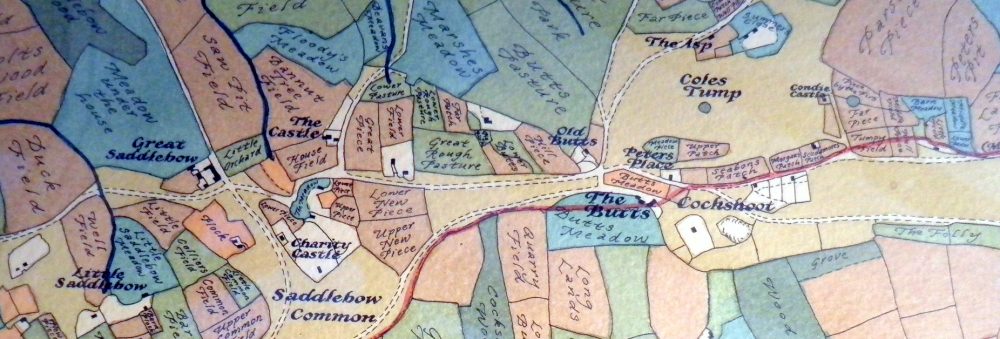
187, The Aylesbury Prune

In the Vale of Aylesbury there once thrived a plum whose name told its ambition – the Aylesbury Prune. Long forgotten, it offers more than nostalgia: it offers opportunity. What if this old-local fruit could become a signature product for the locality or elsewhere?

Rediscovering a Local Treasure

The Aylesbury Prune is a little-known plum cultivar with a strong local story. It hails from the Vale of Aylesbury in Buckinghamshire, once a core fruit-growing locality to the west of the Chiltern Hills. Slow Food in the UK+2Fondazione Slow Food+2

The fruit is small-to-medium, oval, skin blue-black with a slight bloom, flesh golden-yellow, flavour sweet with a touch of acid. Slow Food in the UK+1 It ripens late (often into October), after many other plums have finished. Bernwode Fruit Trees+1

Originally grown commercially—though on a modest scale—it was once “the heart of a thriving industry for the London market”. Bernwode Fruit Trees+1 But nowadays the Aylesbury Prune is very rare. Fondazione Slow Food


Why It Matters for Localism

Localism means grounding production, processing and identity in a defined locality. The Aylesbury Prune ticks the boxes:

  • Grown in a definable locality (the Vale of Aylesbury, Bucks) with historical fruit-growing credentials.
  • A unique cultivar – not one of the ubiquitous imported plums.
  • Late-season harvest gives a niche window for local markets, agritourism or heritage orchard branding.
  • A story: heritage, place, craft, identity. Consumers increasingly value provenance.

If local producers revived the Aylesbury Prune consciously, they could build a distinct product: “From the Vale of Aylesbury’s heritage orchards” rather than “standard plum”.


What a Revival Might Look Like

Here are some steps and ideas:

  1. Orchard revival – Identify old orchards or hedgerow trees of Aylesbury Prune in the locality. Propagate young trees (many nurseries still list them).
  2. Harvest & processing strategy – Because of its late harvest and distinct flavour, you could market:
    • Fresh eating plums (premium niche).
    • Culinary/plum products: tarts, preserves, cooking fruit.
    • Perhaps dried “prune-style” product (though note many British damson-type plums don’t dry the same as Californian prunes).
  3. Branding & storytelling – Use the heritage angle: “A fruit once shipped by canal from the Vale to London markets”, “Reviving the Aylesbury Prune orchard tradition”.
  4. Local supply chain – Sell via farm gates, farmers’ markets, local box-schemes, gourmet shops. Use farm shop cafés, agritourism (pick-your-own), local food festivals.
  5. Identity preservation – Tie the cultivar to the locality (Vale of Aylesbury, Bucks) avoiding generic “region”. Emphasise distinctiveness and scarcity.
  6. Partnerships – Work with local authority food/locality programmes, heritage orchard groups, biodiversity/heritage schemes (the cultivar is listed by Slow Food UK’s Ark-of-Taste. Fondazione Slow Food+1

Challenges to Be Aware Of

  • Scale: The heritage cultivar may have lower yields, less uniformity, and may not match commercial standard plums in shipping/handling ease.
  • Processing for drying: If you aim for a “prune” style dried product, you’d need to test drying behaviour; many British damsons were not historically dried at scale.
  • Market development: Niche heritage fruit demands higher unit price, good branding, and consumer awareness.
  • Orchard management: Old trees may be at end-of-life; propagation and re-establishment take time and investment.
  • Supply chain consistency: Seasonal variation, fruit size/quality may vary and local labour or orchard expertise will matter.

Why Now Is A Good Moment

  • Consumer taste is shifting: emphasis on provenance, heritage varieties, local food narratives.
  • Localism is gaining traction: interest in reconnecting food production and the local foodscape.
  • Farm diversification: growers seeking niche markets beyond bulk commodity plums.
  • Heritage planting: orchard restoration receives public/charitable support in many localities.

123. The Evolution of Modernity

by Richard Heinberg

Download printable PDF version

  • The human world of the early 21st century is dominated by science, cities, and high technology. However, both our modern way of life and our way of thinking about the world sprang up only within the past several centuries. Today’s humans are biologically the same as people who lived 10,000 years ago; but our current habits, expectations, and beliefs are almost entirely tied to machines, infrastructure, energy sources, and artificial materials that have only recently come into existence. Compared to our hunter-gatherer forebears, we might as well be from another planet.

We take modernity for granted, as the fish presumably takes for granted the water in which it swims. But our own metaphorical water is increasingly troubled. Survival-level problems are appearing with more frequency and intensity, including climate change, resource depletion, the disappearance of wild nature, and the toxification of the biosphere. If society cannot extricate itself from this worsening turbulence, our species may not persist much longer.

What’s outside the fishbowl we call modernity? And how did we humans get into it in the first place?

Progress or Polycrisis

Most people who live in industrialized nations now believe that humans are superior to the rest of nature. It is assumed that by using science and reason, along with giant helpings of technology, we can banish scarcity and ignorance. Modernity is thought to be the implicit goal of billions of years of biological evolution. And some of us imagine techno-humans to be the seed pods resulting from this great flowering, capable of spreading life and intelligence into the rest of the universe.

There have long been critics of modernity such as Chief Seattle (“When the green hills are covered with talking wires and the wolves no longer sing, what good will the money you paid for our land be then.”). However, in the last few years a critical discourse about modernity has emerged in books, blogs, and academic literature, notably in the works of three authors—Vanessa Andreotti, Tom Murphy, and Dougald Hine (more names deserve mention, including Robin Wall Kimmerer, Daniel Quinn, Anna Lowenhaupt Tsing, Jeremy Lent, and Joanna Macy, but the aforementioned three will serve our immediate purposes).

Vanessa Andreotti, in her book Hospicing Modernity: Facing Humanity’s Wrongs and the Implications for Social Activism, focuses on the modern mindset, which she characterizes as a collection of “expired stories” from which spring racism, colonialism, and wanton destruction of nature. She contrasts this modern mindset with Indigenous ways of knowing, which not only made societies more sustainable, but gave their members a sense of organic connection with their surroundings and with one another.

Tom Murphy, author of the blog “Do the Math,” sometimes describes himself as a recovering astrophysicist. In essays dating back to 2011, he shows that techno-solutions to climate change and other survival-level predicaments aren’t working and can’t work at scale. Murphy has concluded that only a fundamental shift in how humans inhabit the planet can enable our species to continue. While his starting point differs from Andreotti’s, he has come to share the latter’s outlook on modern versus Indigenous human cultures. Note: Murphy recently shared the story of his intellectual journey on the Crazy Town podcast.

Dougald Hine is the author of At Work in the Ruins: Finding Our Place in the Time of Science, Climate Change, Pandemics, and All the Other Emergencies. In it, he explains why he has stopped focusing on climate change in his environmental writing. Although global warming is a survival-level problem, it cannot meaningfully be addressed without engaging in a deep critique of modernity. Like Andreotti and Murphy, Hine calls upon us to reawaken Indigenous attitudes toward nature.

For these authors, modernity is the cause of the current polycrisis and the impending Great Unraveling. Modernity is likely to comprise a brief and intensely destructive moment in Earth history, because the way we live is unsustainable not just in its details, but in its inherent design. Despite our pretentions and aspirations to be free of natural limits, we humans remain, and always will be, part of nature and subject to it. We pollute and deplete it at our own peril.

Are Humans Great or Terrible?

Implicit in this bifurcation of ways of looking at modernity are two views of Homo sapiens. If modernity is a magnificent achievement, it’s assumed that this is because humans are inherently great and are expressing that greatness through technology. In this view, we humans are more than just clever animals; we are evolving to become gods—as some writers have explicitly claimed.

The critics of modernity describe the current phase of human history not as an expression of intelligence and virtue, but as a cataclysmic mistake: for the sake of momentary comforts, conveniences, and profits, we are generating existential problems that could imperil not just civilization, but planetary life-support systems. One might well conclude from this that humans are terrible.

However, that pessimistic assessment of the worth of our species may be a misreading of both the situation and of the modernity critics. If we consider humans to be animals embedded in ecosystems, then whatever we do is part of nature and evolution. Biological evolution gave us big brains and opposable thumbs. Then cultural evolution via language and toolmaking took over, initiating a rapid self-reinforcing feedback process that has accelerated until the present. Modernity is the first instance in evolutionary history where a species has developed tools and language to expand its range and potential resources, thereby depleting not just its immediate region but global stores of fish, game, trees, soil, and minerals, while overfilling global waste sinks, notably the planetary atmosphere. However, the essential pattern of a species overexploiting its environment, increasing its population until it exhausts available resources and waste sinks, and then dying off, is common in nature. Humans are products of evolution, and whatever qualities drove us to provoke climate change and all the other predicaments of modernity are inherent in evolution itself.

Money, technology, social complexity, and war—human cultural traits that seem to separate us from other creatures—emerged via evolution. Natural selection is a process of improvising and testing; it doesn’t have a goal in mind. Once nature’s improvisation turned in the direction of language and toolmaking, modernity may have become inevitable. While all human groups didn’t follow the path that led eventually to the extreme exploitation that characterizes modern industrial civilization, the existence of even one group with the environmental preconditions, cultural history, and audacity to pursue the path of technological hyper-innovation and empire building made modernity virtually unavoidable. Most other groups were then swept along, first via colonization and later through economic globalization.

While techno-utopians envision humanity taking charge of Earth and then moving on to the stars, critics of modernity, when contemplating the future of our species, are more likely to look for clues in nature. When a species finds a new food source and multiplies, it eventually reaches limits of that food source; its population overshoots a sustainable level and crashes. This overshoot/die-off population cycle is particularly common among invasive species, which often negatively impact native species. However, once invasive species have been around for long enough, they and surrounding native species typically co-adapt—sometimes to the long-term detriment of at least some of the natives, sometimes to that of the invader. If the invaders are predatory, they eventually learn to take only some of their potential prey. If the invaders are prey species, they learn new survival strategies, perhaps including camouflage.

Similar boom-and-bust cycles have happened in human societies. Many societies experienced Golden Ages when resources seemed abundant and when comfort, convenience, and knowledge increased for a significant portion of the population. These Golden Ages were typically followed by Dark Ages of resource scarcity, poverty, and loss of high culture. All that’s different today is that we’ve achieved a global Golden Age based on the use of fossil fuels (which enable us to extract resources in larger quantities and move them longer distances); as fossil fuels dwindle and the consequences of burning them degrade ecosystems, a global Dark Age will likely follow. But its degree of darkness will depend on how willingly and successfully humanity adapts to limits.

Perhaps it’s helpful to think of the historical process of human cultural adaptation to environmental limits in slightly different terms. In the distant past, when a particular human group reached a limits crisis (usually with food), it had two options: indigenize or colonize. To indigenize meant adapting the group’s population size and consumption behavior to levels that could be sustained given existing resources. To colonize meant moving elsewhere, taking over other groups’ resources, or inventing ways to access resources that previously were inaccessible. No doubt circumstances and group history (and therefore mindset) predisposed each group toward one or the other strategy. Modernity marks the historical moment when the colonizers have taken over the whole world. But, having done so, they find themselves in a bind: there’s nowhere else to colonize, the resources held by Indigenous peoples have mostly already been looted, and unexploited new resources (perhaps including thorium or geologic hydrogen) are few and of questionable utility or accessibility. The only real long-term solution is for the colonizers to indigenize.

Evolution, Big Mistakes, and Human Agency

Critics of modernity are not the first people to question our evolutionary urge to colonize. For millennia, Indigenous thinkers, as well as some philosophers from the world’s dominant civilizations, have offered guidance on how to adapt to limits—psychologically as well as practically. In most if not all cases, the impulse to temper our human urge toward greed and outward expansion arose due to a humbling previous descent into scarcity that came from overharvesting resources.

During the last 60,000 years, humans fanned out across the globe, encountering ecosystems new to them. In each unfamiliar place they encountered, they tended to kill large animals that provided a high return on hunting effort. Many of these animals—including mammoths, mastodons, ground sloths, and three species of camels—were driven to extinction, and people had to resort to harvesting smaller game whose hunting required more work. Gradually, people who stayed in one place for many generations learned to leave enough plants and animals unharvested so that these species could reproduce and flourish.

Anthropologists Colding and Folke, in their studies of Indigenous peoples, found six kinds of tribal taboos regulating the harvest of vulnerable species. These are “segment taboos,” which forbade individuals of a certain age, sex, or social class from harvesting a resource; “temporal taboos,” which banned the use of a subsistence resource during certain days, weeks, or seasons; “method taboos,” which restricted overly efficient harvesting techniques that might deplete the stock of a resource; “life-history taboos,” that forbade the harvesting of a species spawning or nesting; “specific-species taboos,” which protected a species at all times; and “habitat taboos,” which forbade human exploitation of species within particular reefs or forests that served as biological reserves or sanctuaries.

Indigenous people weren’t automatically eco-wise simply because they were pre-modern. They inhabited worlds that had already been over-exploited, resulting in conflict and privation. The lessons of moderation were hard-won and eventually resulted in locally rooted cultures that assumed responsibility for the maintenance of nature’s balance, that made modest demands on ecosystems, and that recycled everything. Some indigenous societies, such as the Aboriginal peoples of modern-day Australia, developed practical, tested knowledge for living in balance with the more-than-human world that persisted for tens of thousands of years.

Some later colonizers likewise achieved ecological wisdom after having devastated their environments. By roughly 500 BC, ancient Greece was deforested and its topsoil was largely depleted. This was the context in which Greek stoic and cynic philosophers arose, advising a simple, peaceful, and virtuous life in harmony with nature (Epicurus: “Poverty, brought into conformity with the law of Nature, is great wealth.”).

Among the world religions, Buddhism has perhaps the most ecological message: other organisms, like us humans, are on the path to enlightenment, so don’t harm them if you can avoid doing so. Practice self-restraint and curb your appetites. Many environmentalists are attracted to Buddhism (which, despite its non-violent rhetoric, was spread throughout southern Asia via holy wars). Again, the context in which this religion of moderation emerged was ecological devastation. Anthropologist Marvin Harris offers this summary:

“By 600 BC, . . .  the population had risen into the millions, towns and cities had sprung up, the entire Gangetic plain had become deforested, there was a shortage of pasture and fodder . . . and warfare was incessant.”

Today, as environmental devastation descends upon us all, ecological wisdom is again germinating—this time among climate change activists, students of ecology, and, unsurprisingly, people learning from Indigenous ways. Perhaps today’s critics of modernity are evolution’s growing tip, exploring a way toward the recovery of humanity and the biosphere.

We modern people prize boiled-down bromides we can easily recall, and we like to think we’re in charge of our fate. An honest critique of modernity discourages both mental tendencies. Details matter, the world is rife with nuance, and our agency is limited. However, if there is one simple bit of advice we might do well to remember, it’s this: stay humble. Much of what we think we know is wrong, and the rules of the game of survival are changing. The colonizing rules, which seemed to work so well for a while, at least for some, have propelled us into the evolutionary cul-de-sac called modernity. Going just a little further toward that dead end, via still more economic growth and technological innovation, will provide no solution. A response that reaches back to our very self-identity as humans is required.