Long before localism became a recognised movement, Leopold Kohr was arguing that most of the problems of modern society arose from one simple cause – excessive size.
Kohr, who spent many years teaching in Wales, became famous through his book The Breakdown of Nations. Published in the 1950s, it was a direct challenge to the prevailing belief that bigger nations, bigger cities, bigger organisations and bigger economies were naturally superior. Instead, Kohr argued that whenever any institution became too large, it became difficult to manage, increasingly bureaucratic, and ultimately destructive.
His central idea was remarkably simple. Problems that appear complex often have a common cause. Whether discussing war, poverty, political instability, environmental damage or social alienation, Kohr believed that the underlying issue was scale. Human beings can understand and manage small communities, but they struggle to control vast systems.
Kohr often pointed to the city-state societies of the past. He noted that many periods of cultural creativity, innovation and democratic participation occurred in relatively small political units. By contrast, large empires frequently became centralised, remote and oppressive.
This perspective has enormous relevance to localism.
Localism begins with the belief that many decisions should be made as close as possible to the people affected by them. It recognises that local knowledge is often superior to distant administration. The local farmer understands the land better than a ministry in London. A local community understands its needs better than a national bureaucracy. A neighbourhood often solves problems more effectively than a remote government department.
Kohr would have recognised these principles immediately.
In modern Britain, many of the difficulties facing public services arise from attempts to administer millions of people through increasingly complex national systems. Health care, education, welfare, planning and transport all require huge bureaucracies to coordinate them. As these organisations grow larger, they require more managers, more regulations and more layers of administration.
The result is often a feeling that decisions are made by people who neither know nor understand the communities affected.
Localism offers an alternative. Rather than continually enlarging institutions, it seeks to restore decision-making to the smallest practical level. This does not mean abandoning national government altogether. Certain functions, such as defence, major railways and specialist hospitals, will always require wider organisation. However, many aspects of everyday life can be managed more effectively closer to home.
Kohr’s ideas become even more relevant in a shrinking economy.
The growth era of the twentieth century was built upon abundant energy and expanding consumption. Large-scale systems became possible because society could afford the transport, administration and infrastructure required to support them. As economic growth slows and resources become more constrained, the costs of maintaining vast systems increase.
Under these conditions, local solutions often become more practical than national ones.
Local food production reduces transport costs. Local energy schemes reduce dependence on extensive networks. Local businesses keep wealth circulating within the community. Local care systems can often provide support more efficiently than distant bureaucracies.
Kohr believed that the future would belong not to ever-larger institutions but to societies organised on a human scale. People are more likely to participate in decisions when they can see the consequences. They are more likely to cooperate when they know one another. They are more likely to feel responsible for their surroundings when those surroundings remain within their understanding.
Perhaps the most important lesson from Leopold Kohr is that progress should not be measured by size. Bigger is not necessarily better. A society can become wealthier, more complicated and more technologically advanced while simultaneously becoming less manageable and less humane.
For localists, this insight remains as important today as when Kohr first expressed it. The future may not belong to the largest organisations or the most centralised systems. It may belong to communities that rediscover the advantages of living and working at a scale that human beings can understand.
In that sense, Leopold Kohr was not merely a critic of bigness. He was one of the earliest and most profound advocates of what we now call localism.
Discover more from Chatting about Localism
Subscribe to get the latest posts sent to your email.
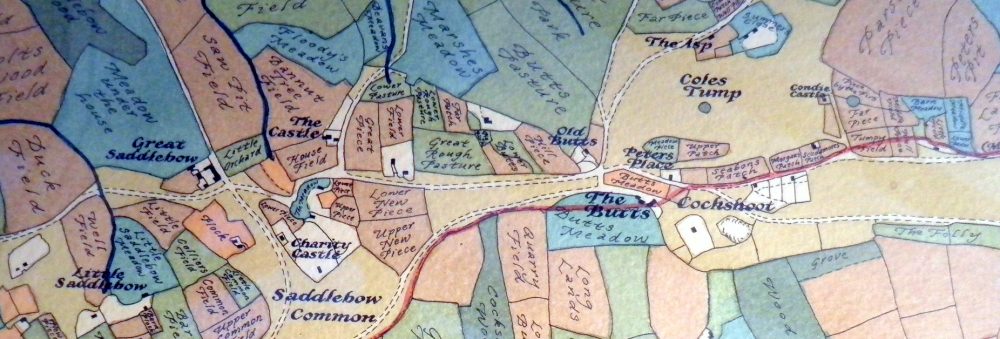
Human scale makes a difference. In small settlements such as villages, people are more like to say hello to those they pass in the street. Once it increases in size to a town or city, people ignore each other.