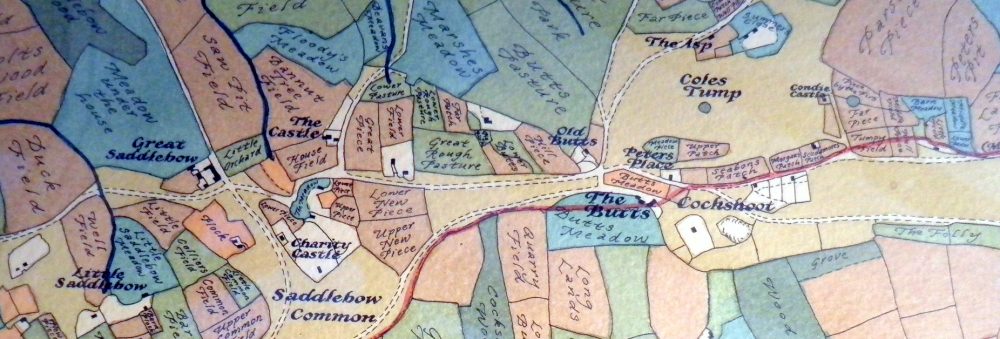
If we look back at English village life around 1600, it is easy to see it as distant and simple. Yet if we set aside the industrial story that followed, and instead add what we have learned about health, ecology, governance, and human wellbeing since then, a different picture emerges. It is not a return to the past, but an understanding of what village life contained that later systems overlooked or displaced.
A village in 1600 was not designed, it evolved. It functioned as a local system tied closely to soil, water, animals, and seasons. People lived within limits that were immediately visible. The boundaries of the locality were not administrative, they were physical and practical.
What we now understand better is that such systems had strong ecological logic:
- Nutrients were largely recycled locally through animals, composting, and human labour
- Food systems were seasonal and therefore naturally varied
- Energy use was low, local, and mostly biological rather than mechanical
- Waste rarely travelled far from its source
Modern ecological thinking confirms something important here. These systems were not efficient in a modern economic sense, but they were often resilient in the sense that they could absorb shocks without total collapse.
Health and the hidden balance of diet and movement
We now know far more about nutrition, hygiene, and disease transmission than people in 1600 could possibly have known. Yet when we apply this knowledge retrospectively, we see an interesting pattern.
Village diets were:
- High in fibre from grains and vegetables
- Low in processed sugar and refined fats
- Dependent on seasonal variation rather than constant supply
Physical activity was:
- Continuous and necessary
- Spread across all ages and genders
- Integrated into daily life rather than separated into exercise
We now understand that many chronic conditions associated with modern life are strongly linked to sedentary behaviour and processed diets. This does not make 1600 healthier in all respects, infectious disease and infant mortality were severe, but it does suggest that the structure of daily life had some inherent protective qualities that were later lost.
Local governance before abstraction
The 1600 village was governed through layered local systems: manor custom, parish responsibility, informal agreement, and church oversight. While not democratic in the modern sense, it was deeply local in practice.
What we have learned since is that governance works most effectively when:
- Decision-making is close to the consequences
- Responsibility and resource are aligned at the same scale
- Rules evolve from lived experience rather than abstract design
Modern systems often separate decision from consequence. In contrast, village governance concentrated both in the same place. This created inequality and limitation, but it also created accountability at a human scale.
Knowledge without external dependency
One of the most important differences between then and now is not technology, but dependence on external systems of knowledge.
In 1600:
- Skills were transmitted directly through apprenticeship and family life
- Knowledge was embedded in practice rather than written abstraction
- Repair, making, and maintenance were normal daily functions
What we have learned since is that systems become fragile when knowledge is centralised and separated from use. Modern research in resilience shows that distributed knowledge systems, where many people hold partial but usable skills, are often more stable under disruption.
The village was such a system by necessity.
Time, season, and human scale
Modern life often treats time as continuous and uniform. In 1600, life was strongly seasonal and cyclical. Work followed daylight, weather, and agricultural need.
We now understand that human wellbeing is strongly influenced by:
- Exposure to natural light cycles
- Variation in activity rather than constant intensity
- Periods of rest built into the year rather than scheduled around productivity
The village calendar embedded these patterns naturally. The modern world often removes them and then tries to reintroduce them artificially.
What was missing then, and what we now know must be added back carefully
It would be misleading to idealise 1600 village life. There were serious limitations:
- High infant mortality
- Limited medical understanding
- Social hierarchy and constraint
- Vulnerability to harvest failure and disease
What we have learned since must therefore be added carefully:
- Clean water systems and sanitation
- Medical knowledge and basic public health
- Better structural housing safety
- Shared emergency response capacity
These are genuine gains that should not be discarded.
A combined understanding for localism
If we remove the industrial detour from the story, what remains is not nostalgia, but a design question.
A localist interpretation of village life suggests:
- Small-scale systems can be ecologically coherent
- Work, knowledge, and responsibility function best when locally connected
- Human wellbeing is strongly tied to seasonal rhythm and physical engagement
- Resilience depends on distributed capability rather than central dependency
But modern knowledge also adds non-negotiable improvements:
- Health protection must be formalised
- Water, sanitation, and shelter standards must be higher
- Vulnerable people require structured support systems
The task is not to recreate 1600, but to recognise that it contained a coherent local logic that modern systems often fragment. Localism, in this sense, is not a step backwards, but a re-alignment of scale, knowledge, and responsibility with human and ecological reality.
Discover more from Chatting about Localism
Subscribe to get the latest posts sent to your email.