With homes flooded, roads impassable and schools closed after Storm Chandra, the question has surfaced again, not as a surprise but as a reckoning. Flooding is no longer an occasional emergency. It is becoming a recurring condition of life in many parts of the UK.
Warmer, wetter winters mean that rivers are behaving differently. They rise faster, stay high for longer, and then fall back into drought. As Professor David Sear of the University of Southampton has observed, rivers are now shaped by extremes, more extremes of flooding and more extremes of drought. In simple terms, the land is being asked to hold more water, more often.
For most of the last century, the response has been to push water away. Ditches were deepened, channels straightened, and floodplains drained to make room for roads, houses and productive farmland. Water was treated as an inconvenience to be moved on as quickly as possible. That logic is now failing.
What is emerging instead is a quieter, more grounded approach, one that sits naturally with localism. Rather than asking how to remove water, communities are beginning to ask where it should be allowed to go.
At Wild Woodbury, near Bere Regis, this shift is already visible. The project covers land upstream of the River Sherford and uses what is known as stage-0 river restoration. Instead of forcing the river into fixed channels, water has been released from ditches and allowed to spread across the land, finding its own paths and re-occupying old routes remembered by the soil.
The result has been striking. According to project manager Rob Farrington, water that once rushed through drainage channels now spreads out, slows down, and sinks in. Minor roads that used to flood no longer do so. The land behaves like a sponge, holding water during heavy rain and releasing it slowly over time. Pools and streams have become so clear they appear almost unreal.
This is not just about wildlife, although wildlife has returned. It is about downstream villages, coastal waters, and places like Poole Harbour that receive whatever the land sends them. Slower water means cleaner water, fewer nutrients, less damage, and more resilience.
Yet even here there is honesty. Farrington acknowledges that this solution cannot be applied everywhere. It requires space. It works best on flat land. In many localities, roads and houses already sit on floodplains. The industrial system put them there, confident that engineering and insurance would deal with the consequences.
This is where localism becomes essential. National policy struggles with such complexity. It thinks in standards and exceptions. Local communities think in gradients, lanes, and memories.
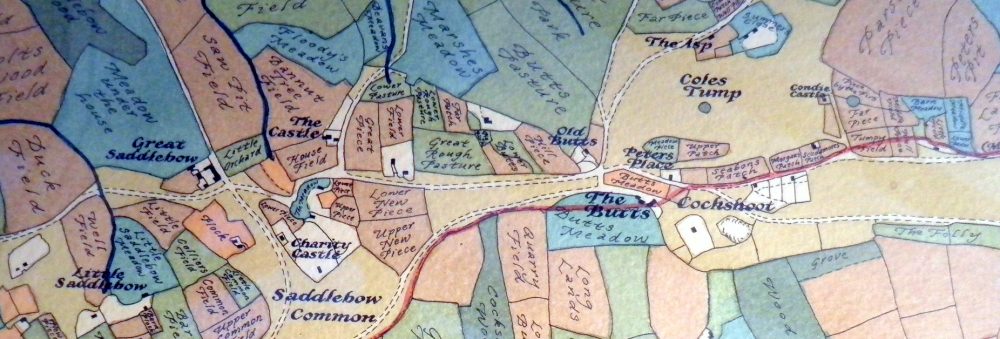
Older maps tell a different story from modern ones. Villages, churches and farmsteads were once built just beyond the winter reach of rivers. People understood floodplains as seasonal riverbeds. They did not need hydrological models to tell them where not to build.
Localism allows that understanding to return, not as nostalgia, but as practical judgement. A village faced with repeated surface water flooding may decide that holding the line is no longer sensible. Instead of endlessly repairing damaged homes, it might choose to move new building to higher ground within the locality, while allowing lower land to become wet meadow, storage ground, or managed marsh.
This is not retreat imposed from above. It is adaptation chosen from within. It may happen slowly. One cluster of houses not rebuilt. A new lane laid slightly higher. A community hall relocated upslope. Over time, the village shifts, just as many have shifted before.
History offers plenty of precedent. The lost medieval town of Dunwich slipped into the sea not overnight, but over generations. Inland settlements have also crept away from waterlogged ground as conditions changed. What matters is not permanence, but continuity.
Professor Sear warns that isolated projects, however successful, are not enough on their own. The scale of change required is large. But scaling up does not mean scaling up machinery. It means linking many local decisions together, each working with natural processes rather than against them.
Localism does not deny the need for engineering. It simply puts engineering in its place. Hard defences may still protect some assets. But the broader task is cultural. It is about relearning how to live with water, not in spite of it.
Surface water is becoming a defining feature of the future landscape. Whether it brings repeated disruption or a new kind of stability depends on who is allowed to decide. When decisions are made locally, with a clear view of the land and its limits, water stops being an enemy and becomes part of the settlement again.
Discover more from Chatting about Localism
Subscribe to get the latest posts sent to your email.