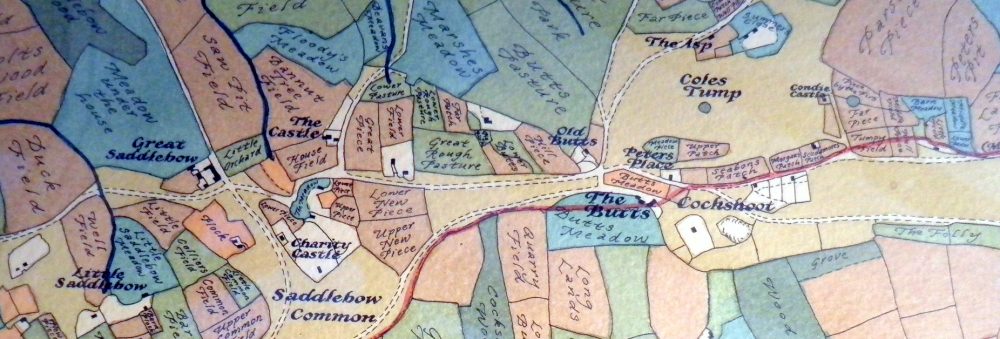
A move towards localism is sometimes misunderstood as a return to the past – perhaps even a return to feudalism, where a small number of landowners controlled most of the countryside and ordinary people had little say over how land was used. That is not the intention.
Localism requires the opposite. It requires that ordinary people have a greater connection with the land on which they live and the ability to produce at least some of the essentials of life.
Land ownership should not mean that a few individuals or corporations control a finite resource that everyone depends upon. Land is not simply another financial asset. It is the foundation of food, water, biodiversity and community life.
A localist society would seek a wider distribution of access to land. This does not mean that everyone needs to own a large farm. A small plot, allotment, community garden or shared local holding can provide valuable food production and reconnect people with the natural systems that support them.
The aim is not ownership by a privileged few, but stewardship by many.
What Kind of Farming?
The farming system required for a localist future would be very different from the industrial model that developed during the period of cheap fossil energy.
Industrial agriculture depends heavily on machinery, long supply chains, artificial fertilisers, pesticides and global markets. It has achieved very high yields, but it has also created problems – soil degradation, loss of biodiversity, dependence on imported inputs and vulnerability when energy becomes expensive.
Local farming would focus more on resilience than maximum production.
This could include:
- Market gardens producing vegetables close to where people live.
- Mixed farms combining crops and livestock rather than separating them.
- Agroforestry where trees, crops and animals are integrated together.
- Permaculture systems designed around natural cycles.
- Small orchards and community food growing areas.
- Traditional crop varieties that are adapted to local conditions.
The emphasis would be on producing nutritious food with fewer external inputs and using local knowledge.
What About Fertiliser?
Modern agriculture relies heavily on nitrogen fertiliser produced using natural gas. This has been one of the major drivers of increased food production over the last century. However, it is also an example of how the industrial economy depends upon abundant energy.
A localist future would need to reduce dependence on synthetic fertilisers and rebuild natural soil fertility.
Possible approaches include:
- Compost made from local organic waste.
- Animal manure from local livestock systems.
- Green manures, where crops such as clover and legumes are grown to fix nitrogen naturally.
- Cover crops to protect soil and improve fertility.
- Biochar, produced from organic material, to improve soil structure and retain nutrients.
- Careful crop rotation to prevent soil exhaustion.
This does not mean abandoning all modern knowledge. Science and technology will still have a role. The difference is that technology would support natural systems rather than attempting to replace them.
Land as a Community Asset
In a localist economy, land would increasingly be viewed as a community asset rather than simply a commodity.
This could include:
- Community-owned farms.
- Shared equipment pools.
- Local food cooperatives.
- Small parcels made available for new growers.
- Long-term leases that encourage stewardship.
A young person should not need to inherit wealth or buy hundreds of acres to participate in food production. Access to land is as important as access to education or housing.
The Scale of Farming
The future is unlikely to be a return to the small farms of the past exactly as they existed. Those farms often involved very hard physical labour and low productivity.
Nor is the answer simply to continue with ever larger industrial farms.
The likely direction is a mixture:
- Larger areas producing staple crops efficiently.
- Smaller local farms producing fresh food.
- Communities growing some of their own requirements.
- More integration between town and countryside.
The key change is that food production becomes less distant and anonymous. People understand where their food comes from and participate in maintaining the systems that produce it.
Land Ownership and the Post-Growth Economy
As the economy moves away from the era of unlimited growth based on cheap energy, land will become increasingly important.
The question will not simply be “how much money can land make?” but “how can land support the survival and wellbeing of communities?”
Localism is therefore not about going backwards. It is about adapting to a different economic reality.
The industrial age allowed humanity to separate itself from local resources. Cheap energy made it possible to import food, transport goods across the world and concentrate ownership.
A post-growth future will require a closer relationship between people and place.
Land should belong to people – but ownership must come with responsibility. The purpose of land is not only to generate wealth. Its deeper purpose is to sustain life.
Discover more from Chatting about Localism
Subscribe to get the latest posts sent to your email.