134. Big Numbers

I seem to be in another world from that of the present government. Maybe this will help.

According to the Daily Telegraph:

The Chancellor’s £9.9bn of fiscal headroom left in her Spring Statement will be wiped out if the Bill is defeated in a Commons vote on Tuesday. (today)

The Office for Budget Responsibility estimates that the cumulative saving of the changes to both incapacity benefits and disability benefits will total £13.7bn by 2029-30. Of that, some £9.2bn would stem from cuts to personal independence payments, known as Pip.

According to ChatGPT:

Every year, the UK spends approximately £50 billion on transport: roughly £31 billion subsidising public transport (mostly rail) and another £18–20 billion on maintaining and expanding roads. In contrast, the NHS now costs over £180 billion annually.

What does this say about our priorities? In truth, it reflects an economy still wedded to the idea of long-distance movement – daily commuting, cross-country freight, massive infrastructure projects designed to tie the nation together. But the ground beneath this model is shifting. The shrinking economy, rising energy costs, ageing populations, and the climate crisis all point toward a future where people travel less, and more of life happens locally.

If we break it down, perhaps £35–40 billion of the £50 billion transport budget is allocated to sustaining long-distance networks – including national rail, trunk roads, high-speed projects, and intercity bus corridors. Only about £10–15 billion truly supports local transport: the buses, small roads, footpaths, cycle lanes, and concessionary travel schemes that keep communities connected.

Localism is the practical response to the end of cheap fossil-fuelled mobility. Rather than building trunk and primary roads, funded by the State, and subsidising national rail systems, spending would be focused on neighbourhood bus routes, maintaining village roads, improving walking infrastructure, and ensuring every town has safe paths to schools and shops.

In short, we could spend less on moving people further, and more on making life easier closer to home. The benefits would flow not just to those who travel less, but to society as a whole: more resilient communities, reduced emissions, and stronger local economies.

The challenge now shouldn’t be on building giant rail projects. It’s how to spend that money where it matters – on the doorsteps and streets where real life happens.

131. Has Growth Ended? – A Review

Read the full article here: https://surplusenergyeconomics.wordpress.com/2025/05/29/304-has-growth-ended/

Dr. Tim Morgan’s article asks a big question: Has economic growth come to an end? He thinks it might have—and not just because of politics, bad decisions, or short-term problems, but because of something much deeper: the limits of energy and nature itself.

What’s the article about?

Morgan believes the global economy may have hit a turning point in 2023. Up until now, we’ve kept pushing for more growth—more money, more production, more consumption. But he argues that the real economy (what we physically do and make) is no longer keeping up with the financial economy (what we imagine through loans, debts, and stock markets).

He says the gap between what we think we have and what we actually do have is getting wider, and that spells trouble.

What’s causing the slowdown?

The main issue, according to Morgan, is energy. Everything we do—building houses, growing food, running hospitals—relies on energy, especially oil, gas, and coal. However, it now requires increasingly more energy just to extract that energy from the ground. This is referred to as the Energy Cost of Energy (ECoE).

The higher the ECoE, the less energy is left over for the rest of the economy to grow. Morgan says we’ve reached the point where the energy “surplus” is shrinking. That’s why prosperity—the ability of ordinary people to live comfortably—is already falling in many countries.

What does the future look like?

If Morgan’s right, we’ll see:

  • A steady decline in real wealth over the next 25 years.
  • Fewer things people can afford beyond basic needs (what he calls a collapse in “discretionary” spending).
  • Financial systems are under strain because they’re based on the idea that growth will continue forever.
Is there anything we can do?

Morgan doesn’t give a lot of solutions in this piece, but he does hint that we’ll need to:

  • Be more realistic about what the future holds.
  • Stop pretending we can grow forever.
  • Find ways to live well with less.
Final word

Dr. Morgan’s message is profound: the era of endless economic growth is over. We now need new ways to think about prosperity—ones based on what really matters, not just money and markets. This article is a great starting point for that conversation.

130. Economic Contraction, Coming Right Up

Gail Tverberg, the author of the blog Our Finite World, is a researcher and actuary with a background in mathematics. She focuses on the interconnection between energy limitations and economic systems, particularly how finite energy resources impact economic growth and stability. Tverberg has been writing on these topics since 2006, bringing a unique perspective that combines actuarial analysis with energy economics.

In her May 27, 2025, article titled “Economic Contraction, Coming Right Up,” Tverberg argues that the global economy is poised for a significant downturn over the next decade due to fundamental physical and resource-based constraints.

Main Conclusions

1. The Economy as a Physics-Based System Facing Diminishing Returns

Tverberg posits that the global economy operates as a “dissipative structure,” a concept from physics describing systems that require continuous energy input to maintain order. She asserts that as easily accessible resources are depleted, the energy and effort required to extract remaining resources increase, leading to diminishing returns. This phenomenon affects not only fossil fuels but also minerals such as copper and lithium, as well as arable land and freshwater.

2. Debt and Financial Systems Are Unsustainable Without Growth

The article highlights that modern economies rely heavily on debt, which presupposes future growth to repay. However, with physical limits to growth becoming more apparent, the ability to service debt diminishes, potentially leading to defaults and financial crises. Tverberg notes that high debt levels can temporarily mask resource constraints but ultimately exacerbate economic instability.

3. Societal Complexity Will Decline

Drawing on Joseph Tainter’s work on the collapse of complex societies, Tverberg suggests that as energy and resources become increasingly scarce, societies will be compelled to simplify. This could manifest as reduced government services, infrastructure decay, and a general decline in living standards.

4. Emergence of New Economic Structures

While acknowledging the challenges ahead, Tverberg believes that new, simpler economic systems will emerge as adaptations to the changing resource landscape. These systems will likely be less energy-intensive and more localised, reflecting the constraints imposed by diminished resource availability.

Tverberg’s analysis offers an enlightened perspective on the future of the global economy, emphasising the physical and resource-based limits to growth. Her integration of concepts from physics and systems theory provides a unique lens through which to view economic challenges.

However, some may argue that her outlook underestimates the potential for technological innovation and policy interventions to mitigate resource constraints. Advancements in renewable energy, efficiency improvements, and shifts in consumption patterns could play significant roles in addressing the issues she raises.

Nonetheless, Tverberg’s emphasis on the interconnectedness of energy, resources, and economic systems serves as a valuable reminder of the foundational elements underpinning modern economies. Her work encourages a holistic examination of economic sustainability, urging consideration of physical realities alongside financial metrics.Our Finite World

For a more detailed exploration of her arguments, you can read the full article here: Economic Contraction, Coming Right Up.

128, When Growth Stops: What Happens Next Isn’t Political, It’s Inevitable

  • A look at how the world may change when governments cling to an old economic story, while reality quietly moves on.
  • This is not a vision from the left or the right. It’s not about what anyone wants to happen. It’s about what will unfold around us – quietly, unevenly, and outside the headlines.

We have lived for decades in an economy built on growth. Growth paid the wages, funded the services, justified the debts, and kept governments in motion. It shaped policy, purpose in politics, and confidence in households.

But that era is ending.

Not with a crash, but with a slow, stubborn refusal to continue. Energy is no longer cheap. Supply chains are more fragile than we realised. Populations are ageing. Climate pressures are rising. Global trade is becoming patchy and unreliable. And all the while, prices rise while incomes don’t.

The government, meanwhile, continues as if none of this is happening. It draws up new growth plans and talks of turning corners and unleashing potential. But the old levers no longer work. Nothing takes off. People quietly stop listening.

And beyond the headlines, big institutions start to vanish.

Supermarkets struggle with rising costs and falling demand. Most bank branches have already closed, and digital systems are becoming unreliable. Public services shrink. Connectivity becomes patchy. Confidence drains away.

This is not the failure of a government. It is the end of a model. The growth economy depended on scale, complexity, and rising consumption. When those are no longer possible, the systems built around them begin to fade – not because anyone decides to shut them down – but because they no longer work.

At the same time, global markets begin to fragment. Trade becomes slower, riskier, and more expensive. Countries turn inward, not for political reasons, but because there’s no longer much choice.

And yet, life does not end.

In place of the national economy, a different kind of economy emerges. People grow food, fix things, share tools, and find ways to get by. Empty land is cultivated. Empty buildings are used. Trust becomes local. Skills return. It’s not smooth. It’s not easy. But it is possible.

This isn’t a movement. It’s not a programme. People do it when the world changes and the system doesn’t. They will build something smaller, slower, and more practical in its place.

The danger is not collapse. The real threat is pretending it isn’t happening. The government risks losing all relevance by clinging to a story of growth that no longer fits the world. It talks while the future quietly organises itself elsewhere.

We are not heading into a political crisis – we are heading into a material one. But if we let go of the old assumptions, we may find that something new – and deeply local – can take root in the space that follows.

It won’t look like the past. But it might work.

124. How the Evolution to the New Economy Works

Across the developed world, economies are beginning to change in ways that mainstream analysis struggles to explain.  Growth is stalling.  Consumption is slowing.  Traditional jobs are disappearing.  Something more profound than a business cycle is at play: the old economy is winding down, and a new one is emerging.

This is not a smooth or painless transition.  It is being driven not by planning or reform, but by necessity.  As formal employment shrinks and financial structures falter, people adapt informally, locally, and creatively.  They are shifting from consumer-oriented jobs to roles that support life more directly, even if these roles fall outside official recognition or legal frameworks.

This is how the evolution to the new economy works.


From Growth to Redundancy

For decades, the industrial economy flourished through the growth of discretionary markets—sectors built around non-essential spending: fashion, tourism, entertainment, advertising, hospitality, and a vast range of services that depend on surplus income.  These markets expanded thanks to rising wages, easy credit, and relentless consumer demand.

But in today’s world, discretionary spending is under pressure.  Household budgets are tightening due to inflation, debt, housing costs, and energy bills.  Consumers are less able—and less willing—to spend on non-essentials.  As a result, businesses in these sectors are cutting back.  Jobs are being lost.

When someone in a discretionary job becomes redundant, they begin an arduous journey.  The first step is unemployment.  The second is searching for something more secure, grounded, and often more local.


The Shift to Essential Work

With fewer well-paid roles available, many redundant workers turn to essential occupations.  These jobs keep daily life functioning: food production, caregiving, building repairs, cleaning, small-scale deliveries, informal childcare, and personal services.  They are often physically demanding, less secure, and poorly paid—but they are necessary.

In towns and villages across the country, we are seeing the quiet growth of this economy of necessity.  It is not driven by profit or prestige.  It is driven by need.

Much of this work exists outside of contracts, tax records, and conventional regulation in the informal economy.  Some of it operates in the black economy, where earnings go unrecorded.  A smaller proportion may cross into illegality: untaxed trading, unlicensed sales, or in some cases, survival-driven criminal activity.

This is not moral decline.  It is economic evolution and adaptation.


The Decline of the Financial Economy

The financial economy wobbles as the real economy shrinks and labour is reallocated.  This is the sector that deals in money, credit, and speculation.  Its valuations depend on assumptions of future growth and consumption.  When these assumptions fail, the system destabilises.

Redundancy weakens income.  Falling incomes reduce spending.  Lower spending hits corporate earnings.  In turn, markets lose confidence.  Asset prices fall.  Government revenues decline.  Debt becomes harder to service.  A vicious circle emerges.

Government attempts to revive growth—through stimulus packages, interest rate cuts, or quantitative easing—may delay the reckoning, but they cannot prevent it.  When growth is no longer viable, the financial economy loses its anchor in the real world.


The Rise of Localism

As national systems falter, people fall back on what is close and familiar.  Localism—a pattern of life rooted in place, relationship, and mutual support—begins to grow.

In the emerging economy, food is grown near where it is eaten.  Services are exchanged informally, sometimes through barter or favour.  Tools are borrowed, goods are repaired, and homes become productive rather than just consumptive.  The goal is not to maximise profit but to meet needs with minimal dependence on distant systems.

Localism is not nostalgic.  It is pragmatic.  It offers resilience where globalised supply chains and centralised governance falter.  It is often slower, smaller, and less efficient in industrial terms, but more adaptive and humane.

The early stages are difficult.  The transition brings lower incomes, fewer comforts, and greater reliance on personal relationships.  But over time, this economy can offer something more profound: a sense of purpose, belonging, and security that modern consumerism could never provide.


A Quiet Evolution

This shift is happening now, not through policy, but through quiet necessity.  It is not a revolution.  It is not a collapse.  It is an evolution.

It begins when someone loses their job.  It deepens when they take up essential work that pays less but matters more.  It continues as they trade, grow, mend, care, and support others in ways that fall outside official channels.  And it stabilises as local life patterns take root and begin to flourish.

The old economy may continue to dominate headlines.  But underneath, a new economy is emerging—smaller, more local, and more human.

The sooner we recognise this transformation, the better we can prepare for it—and help one another through it.
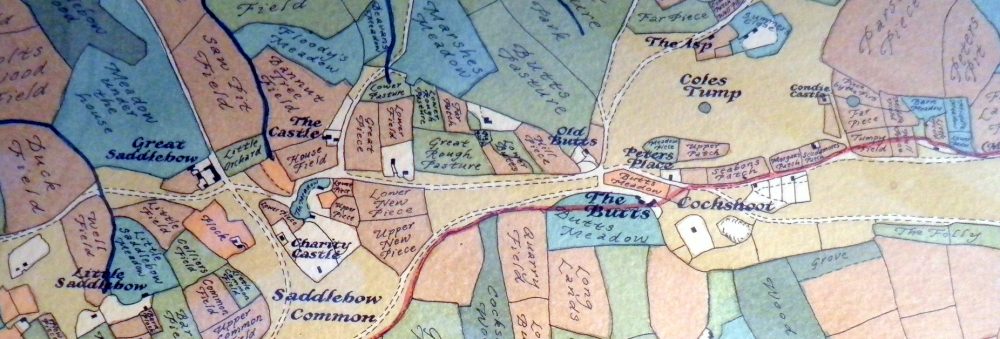
121. The Return of Compensation-Based Justice: An Idea for Localism

In the early Middle Ages, in small kingdoms like Ergyng — which once lay between Wales and England — law was not based on state-run punishment. It was based on compensation. If you injured someone, you paid them, or their family, a sum of money or goods. Justice was not an abstract bureaucratic process; it was an act of direct reparation between individuals.

As our society moves toward more localist forms of living — smaller, more self-reliant communities, detached from the vast structures of state bureaucracy — it is worth revisiting this ancient and surprisingly humane idea.


A Brief History of Compensation Law

In early British societies like Ergyng, the law was customary and largely oral. It rested on a few simple principles:

  • Harm must be repaired. A physical injury, theft, or insult demanded payment to the victim.
  • Kinship matters. Families, not just individuals, were responsible for paying and receiving compensation.
  • Status is recognised. Different social roles — farmer, craftsman, noble — carried different levels of compensation for injury or death.
  • Local witnesses decide. Disputes were settled by community elders or assemblies, without a distant legal system.

Written codes, where they existed, mainly served to record these customs rather than invent new ones. Justice was about restoring balance, not enforcing punishment for its own sake.


Why Compensation Fits a Localist Future

Localist societies need justice systems that are:

  • Local and flexible
  • Focused on the victim
  • Reparative, not destructive
  • Community-owned

A compensation-based system meets all these needs, avoiding distant bureaucracies and helping communities to heal themselves.


How It Might Work Today

Imagine a small localist town in the near future. A theft occurs. Instead of calling the police, the victim brings the case before a local assembly—a meeting of trusted community members.

If the assembly finds the accused responsible, they order repayment:

  • The stolen goods must be returned (or replaced).
  • Based on the harm and distress caused, an additional sum is paid directly to the victim.
  • If necessary, the offender’s family or community group helps raise the sum.

If the offender cannot pay, alternative forms of compensation — such as labour, community service, or structured repayment — could be arranged. The goal is not punishment for its own sake, but restoration of trust and balance.

Importantly, repeat offenders or those who refuse to comply might lose their standing in the community — a serious penalty in a world where trust and reputation are vital.


Learning from the Past

Compensation-based justice is often dismissed today as primitive or outdated. Yet it reflects deep wisdom about human society: harm must be acknowledged and repaired, not hidden behind distant systems of authority.

In rethinking how we live in smaller, more resilient communities, we should not be afraid to look back. The experiences of forgotten kingdoms like Ergyng offer valuable lessons — not as museum pieces, but as living ideas for a new, localist society.


Real justice happens face-to-face — restoring relationships, rebuilding trust, and repairing the harm. It’s time to remember.