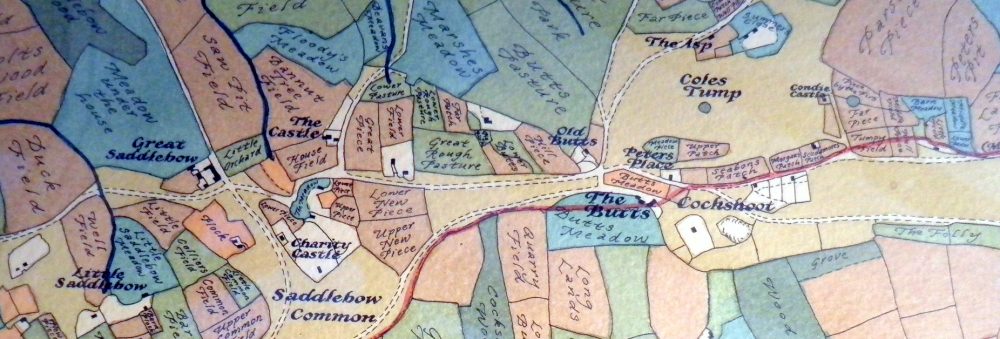
178. Houses and Cottages in a Wood Economy

In a fossil-fuel world, houses are made from brick, concrete, steel, and plaster-board — materials that may travel thousands of miles and depend on distant energy.

In a wood economy, homes return to what grows underfoot. Shelter becomes local again, rising from the same coppice that feeds the fire and mints the coin.

Houses That Grow

Each locality keeps a map of its coppice — oak and chestnut for beams, hazel for wattle, willow for thatch spars. A small part of the harvest is reserved for building and repair. The rest goes to fuel and trade.

A cottage in the wood economy is not a mass-produced box. It is a living structure built for repair and renewal:

  • Frames pegged together from oak or chestnut.
  • Walls woven from hazel rods and plastered with clay and straw.
  • Roofs of shingle, thatch, or split larch boards.
  • Floors and fittings in beech and elm.

Every part can be mended with hand tools and local materials. Timber seasoning, daub mixing, and thatching are skills held by the community, not by distant firms.

Building with Biochar

Some materials can improve with age. Biochar — the stable carbon produced in clean kilns — can be mixed into lime plaster or clay walls. It lightens the structure, stores carbon, and regulates moisture. Roads and paths can also use charcoal fines as a binder, giving them strength and a dark, heat-absorbing surface.

In this way, each new cottage helps bank carbon rather than release it. Fire, used carefully, cools the earth.

Fairness Through the Coin

Housing is paid for in wood coins. Because each adult receives an equal issue, no one is excluded from warmth or shelter. Those with skill earn extra coins through carpentry, joinery, or roofing. The cost of a house is tied to the coppice itself — a natural brake on speculation and debt.

A new family can build or expand only when the coppice allows. Growth is organic, not explosive. Villages stay within walking distance of their woods.

Shade, Shelter, and Climate

Houses stand among trees. Broadleaf canopies shade the roofs in summer and break the wind in winter. Trees absorb water from heavy rain and cool the air through evaporation. Planting becomes part of building. Each new cottage comes with saplings in the ground.

The Work of Cottagers

Cottagers are the foundation of the wood economy. They cut poles, tend gardens, weave wattle, and carry fuel. Their work is physical but steady, linked to the seasons. Those with weaker bodies find lighter roles — keeping ledgers, measuring moisture, or running communal workshops. Every hand counts.

Community Buildings

Not every structure is a cottage. There are shared spaces built from the same materials:

  • The bakehouse, with its masonry stove burning seasoned wood.
  • The bathhouse, heated by a district loop from the same kiln.
  • The meeting hall, timber-framed and whitewashed, serving as school, theatre, and chapel.

These buildings remind the area that heat, labour, and leisure all come from common effort.

Aesthetics of Restraint

In a wood economy beauty comes from proportion, not ornament. A well-built cottage shows its frame. Roof lines follow the slope of the land. Paint is rare; limewash and oil stains suffice. Light filters through small windows rather than large panes. The result is a quiet beauty — humble, practical, and enduring.

A Living Architecture

When a house burns, storms, or decays, the wood returns to the cycle. Charred beams feed the biochar kilns. New timber is cut and seasoned. A home is rebuilt, not replaced. Architecture becomes part of the woodland rhythm: growth, use, decay, and renewal.

151. The Decline of Surplus Energy and What it means for Prosperity: Part One

For two centuries we grew because we had cheap energy with a large surplus. We used a little energy to get a lot back. That surplus powered everything beyond basic survival. As the surplus falls, more effort must go into simply running the essentials. Less is left over for comfort, variety, and growth.

What this means for prosperity

Prosperity depends on what is left after the basics are paid for. When energy takes a bigger bite, households have less money for eating out, leisure, travel, new clothes, and gadgets. Firms have less to invest in staff and new kit. The state collects less tax from slowing activity while costs for health, care, and infrastructure keep rising. The result is a slow squeeze on the domestic economy. Discretionary markets shrink first. Repairs replace replacements. Second hand replaces brand new. People trade time and skills, not only money. It feels like a reduction in choice, pace, and reach.

If the present UK economic system remains unchanged

Assume we try to run the current model as if nothing basic has altered. Prices will signal scarcity, but investment will still chase short term returns. Debt will try to bridge the gap. Households will juggle higher bills and lower real incomes. Local shops will thin out. Out of town retail will struggle with energy and transport costs. Public services will ration informally through waiting time. Councils will delay maintenance. National supply chains will trim range and carry less stock.

Daily life steps back toward the habits of the past. People travel less and nearer to home. More meals are cooked from basic ingredients. Gardens and allotments become practical, not hobby. Homes fill with repaired items. Multi purpose community spaces return. Sharing becomes normal, from tools to car lifts. Not by romance, but by necessity. We keep much of the formal frame, yet an informal layer spreads underneath it. That is how the system reverts, quietly, to an older pattern.

Will this be simple evolution, or a revolution in the economic system?

Both are possible. Evolution happens when institutions accept the energy constraint, and then redesign money, services, and rules to fit a world that is no longer expanding. Revolution happens when the formal system refuses to adapt while the pressure keeps rising. The outcome depends on pace, honesty, and trust.

How change actually happens

First, the energy return declines, then costs creep through everything. Discretionary sectors contract. Tax receipts soften. The state trims or targets benefits. Local authorities defer projects. Households move decision by decision toward thrift. Informal exchange grows, from neighbour help to small cash jobs to co ops. Small producers emerge because large scale margins are too thin. A parallel economy forms, close to home.

If policy stays fixed, stress builds. Debt becomes harder to service. Banks and lenders pull back. A few shocks, such as a winter price spike or a supply interruption, expose the lack of slack. Trust in promises, public and private, weakens. People and firms seek reliability over growth. They value steady supply over low sticker price. They accept less variety if it is nearer and sure. At that point the formal rules either bend to reality, or they break.

What a managed evolution could look like

Government and councils recognise that the era of surplus is over. They shift focus from maximising throughput to securing essentials. Planning and licensing make space for small scale production, repair, and food. Procurement favours nearer suppliers to cut energy risk. Money and credit support maintenance, not just new build. Pricing protects basic needs, perhaps with lifeline tariffs. Transport policy backs walking, cycling, and small electric fleets for short trips. Education and training move toward practical skills. The aim is resilience first, efficiency second.

What a rupture could look like

If denial holds, cuts deepen, backlogs grow, and services hollow out. A sharp energy shock triggers business closures and job losses in the already thin discretionary sector. Households default. The tax base shrinks. Central government centralises more decisions to hold the line, which slows local problem solving. Black markets grow. A new settlement then arrives fast, not by design, but through breakdown. Price controls, rationing, emergency procurement, and strict priorities appear. After the shock, rules are rewritten in haste to match the new reality.

Why a return to the past is only partial

We will not rewind to the 1930s. We keep knowledge, basic digital tools, and some modern infrastructure. But the pattern feels familiar. More human work. Shorter supply lines. Modest output with high care for durability. Less travel. Smaller, multi use spaces. Community institutions matter more. National systems still exist, yet local practice carries more of the load.

Choosing the path

The energy fact will not change. The choice is whether we change our systems with it. Evolution is calmer. It needs plain talk about limits, early support for essentials, and legal space for small scale activity. It rewards households that adapt and communities that organise. Revolution is the risk if we delay, deny, or defend sunk models too long. Then change arrives suddenly and on harder terms.

What to watch

Shrinking ranges on supermarket shelves. Longer waiting times. Rising repair trades. Growth of allotments and local food. More second hand. New mutual aid groups. Small makers and services that thrive by being near. These are signals of the shift. They are also the seeds of the next economy.

Conclusion

Falling surplus energy leads to falling surplus prosperity. If we keep the current system unchanged, life will narrow and move closer to home, much like the past. That can be a managed evolution or a rough revolution. The difference lies in whether we accept the limit and redesign around it, or pretend it is not there and let the limit redesign us.

145. Beyond Growth: The Natural Evolution of the Shrinking Economy

Most political and economic thinking today is built on one assumption – that economies will keep growing forever.

But what happens when growth stops?

In Beyond Growth, we face the unavoidable reality: nature’s limits will slow, then reverse, into economic contraction.

The economy will shrink.

This shift will affect every aspect of life – jobs, housing, healthcare, food production, and community organisation.

This concise and thought-provoking piece explains:

  • Why growth cannot continue indefinitely – and the evidence all around us.
  • What a shrinking economy means for government, business, and ordinary people.
  • How localism – shifting power and resources to communities – offers a stable and humane way forward.
  • The transition from formal to informal systems, and why it is already underway.

Beyond Growth isn’t just a warning – it’s a blueprint for adapting, surviving, and thriving in a post-growth world. Written in clear, accessible language, it is aimed at policymakers, community leaders, activists, and anyone concerned about the future.

Download and save your free PDF copy of Beyond Growth and start imagining the economy we will all be living in tomorrow.

Most political and economic thinking today is built on one assumption – that economies will keep growing forever. But what happens when growth stops?

In Beyond Growth, we face the unavoidable reality: nature’s limits will slow, then reverse, economic expansion. This shift will affect every aspect of life – jobs, housing, healthcare, food production, and community organisation.

Beyond Growth isn’t just a warning – it’s a blueprint for adapting, surviving, and thriving in a post-growth world. Written in clear, accessible language, it is aimed at policymakers, community leaders, activists, and anyone concerned about the future.

Download your free PDF of Beyond Growth and start the conversation about the economy we will all be living in tomorrow.