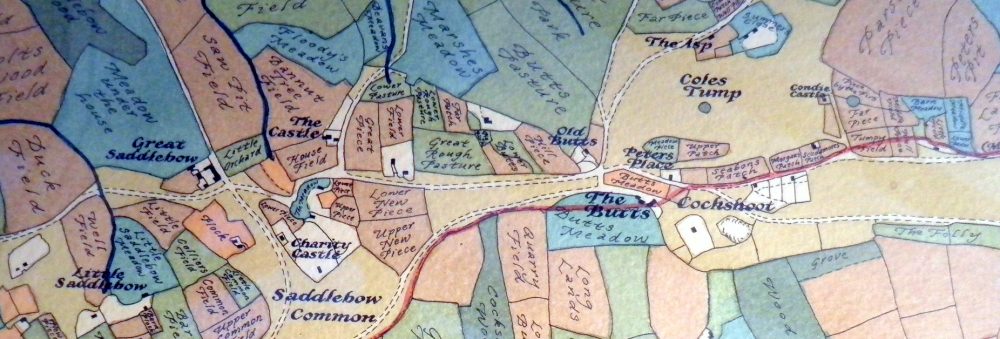
The history of the United Kingdom can be seen as an economy which grew and shrank and grew again, and so on, driven by rising and falling energy surpluses.
After Rome: Energy Collapse and Political Fragmentation (5th–9th centuries)
When Roman rule ended in Britain in the early fifth century, the collapse was not only political. It was energetic and economic.
Roman governance depended on surplus extracted from agriculture and trade, enforced through taxation, roads, towns, and paid officials. When that surplus disappeared, the system could not be maintained.
Energy surplus is the extra energy left after people have met their basic needs. It is what allows societies to build, travel, govern, trade, and create things beyond survival.
Small surpluses come from human effort, animal power, food, wood, and water. These support local economies and simple administration.
Large surpluses come from fossil fuels. These support cities, extended supply chains, national governments, and global trade.
When energy surplus grows, economies expand. When it shrinks, economies simplify and become more local again.
Britain then became fragmented into small, autonomous kingdoms. Governance shrank to the scale permitted by available energy. Power could only operate where it could be exercised directly. Authority depended on walking distance, personal loyalty, and local knowledge.
Economic life became intensely local. Energy came almost entirely from human labour, animal traction, and local biomass.
Local Biomass is:
Wood used for fuel, charcoal, and construction
Crop residues such as straw
Grasses and fodder grown to feed animals
Animals themselves as a source of energy
Human food energy produced from local agriculture
In a low-energy economy, almost all usable energy comes from biomass. People eat locally grown food. Animals eat local fodder. Firewood is gathered nearby. Materials are grown or harvested close to where they are used.
Biomass is limited by land and time. You cannot extract more wood or food than the local landscape can regenerate. That natural limit keeps economies small, local, and seasonal. It also prevents long-distance centralisation, because energy cannot be moved cheaply.
Long-distance transport was expensive and unreliable. Under these conditions, central administration was impossible. Survival depended on proximity.
This was not disorder. It was governance resized to fit a low-energy economy.
The Emergence of Local Administration: Shires, Hundreds, and Wapentakes (9th–11th centuries)
As agricultural output slowly improved, a modest surplus returned.
This allowed more structured local administration to emerge, particularly under later Anglo-Saxon rule.
England developed shires, later known as counties, as broad administrative areas. Within them were hundreds, or in areas of former Danelaw influence, wapentakes. The difference in name reflected legal custom rather than function. Both were units of local governance designed to operate within strict energy limits.
Hundreds and wapentakes were not bureaucracies. They were assemblies. They handled justice, land disputes, obligations, and local order. Courts met at regular intervals. Attendance was personal. Decisions relied on reputation, oath, and community enforcement.
These systems existed for practical reasons. Travel had to be possible within a day. Administration had to be cheap. Authority had to be visible. Justice had to be embedded in daily life.
Later, during the era of a national monarch, royal power was thin. Sheriffs represented the crown, but relied heavily on local cooperation. Governance was layered rather than centralised.
- Norman Rule: Central Authority Built on Local Foundations (11th–13th centuries)
The Norman Conquest did not abolish counties, hundreds, or wapentakes. It took them over.
The Normans imposed a new ruling elite, but relied on existing local administrative structures. What changed was the direction of extraction and control. Land was redistributed. Obligations were formalised. Written records became more important.
In this context, extraction does not mean only the physical removal of resources such as minerals or fuel. It refers more broadly to the organised removal of surplus from where it is produced to where it is controlled. This includes food, labour, energy, rent, taxes, and later money and profit. Centralised systems depend on this process. When surplus can no longer be extracted without damaging local viability, those systems weaken, and local forms of organisation reassert themselves.
The Domesday survey illustrates the shift to written records. It was possible only because surplus and administrative capacity had grown enough to support a nationwide audit. Yet the information gathered remained grounded in local knowledge.
This period marks the beginning of systematic centralisation. Local courts remained active, but royal courts expanded. Money replaced payment in kind. Law became more uniform.
Central authority grew because it could now be afforded.
Growth, Energy, and the Limits of Medieval Centralisation (13th–15th centuries)
As water power spread and farming intensified, surplus increased further. Towns expanded. Cathedrals, castles, and manor houses multiplied. Governance became more formal and more distant.
Yet this system remained fragile. When surplus collapsed in the fourteenth century due to famine and plague, central enforcement weakened. Labour shortages undermined manorial control. Large houses became unaffordable. Obligations loosened.
Local autonomy increased again. Informal arrangements replaced rigid rules. Authority drifted back toward locality, not through reform, but through necessity.
This pattern is essential. Centralisation advanced only while surplus allowed it. When surplus fell, local systems resurfaced.
Fossil Fuels and the National Bureaucratic State (18th–19th centuries)
The Industrial Revolution transformed the scale of economic and administrative life. Fossil fuels release vast quantities of stored energy. Coal allowed work to be concentrated, multiplied, and transported. Production no longer depended on land, season, or muscle.
This new energy regime generated an unprecedented surplus. Factories expanded. Cities grew rapidly. Transport improved. Administration scaled up. Permanent salaried officials became normal. Authority could now be exercised reliably nationwide.
Counties and local courts were not abolished, but they were absorbed into a national hierarchy. Local discretion narrowed. Uniform rules replaced local judgment. Governance became more distant because energy allowed it to be.
This period also saw the consolidation of the national monarchy and state. Taxation systems expanded. Law became increasingly standardised. The costs of administration could be met because the surplus was abundant.
An Interlude: Railways as a Surplus Warning Signal
The nineteenth-century railway boom and bust reveal a crucial aspect of this phase of expansion.
Railways were made possible by coal. Without fossil energy, rails, locomotives, steel production, and large-scale earthworks would have been inconceivable. Coal powered not only the trains, but the financial and industrial systems that built them. This sudden abundance of usable energy created a national surplus.
That surplus sought outlets. Railways appeared to offer certainty, profit, and permanence. Investment surged. Lines were promoted far beyond immediate need. Routes duplicated one another. Some ran through sparsely populated areas with little long-term demand.
This was not irrational behaviour. It was what surplus looks like when it is abundant and searching for expression. Energy abundance encouraged confidence. Financial systems amplified it.
The collapse that followed was not a failure of the railways themselves. It was a correction in scale. Capital had outrun underlying economic reality. What survived was a smaller, more viable network. What disappeared were speculative extensions that surplus had briefly made possible.
Railways also enabled a new level of administrative centralisation. Distance collapsed. Officials, goods, and information could move quickly and cheaply. National governance became practical in ways it had never been before. Local systems were increasingly subordinated, not because they failed, but because energy allowed authority to operate at scale.
Later contraction made the limits visible again. Branch lines closed. Rural connections disappeared. The network retreated toward routes that still justified their energy and maintenance costs. This was not merely a policy choice. It was surplus reality asserting itself.
From Managed Centralisation to Global Overreach (Late 19th–20th centuries)
After the railway corrections, centralisation continued in a more managed form. Infrastructure was treated as essential rather than speculative. The national state deepened its role in welfare, planning, policing, and regulation.
Oil later extended this trajectory. Energy became more flexible and mobile. Cars, aviation, suburban living, and global supply chains expanded. Economic life stretched far beyond local and even national boundaries.
Globalism was not an ideological project at first. It was an energy condition. Cheap fuel made distance irrelevant. Supply chains lengthened. Local production declined. Authority moved further away from daily life.
The national state reached its greatest scale during this period because surplus allowed it to do so.
The Present Transition: Shrinking Surplus and Administrative Strain (21st century)
That condition is now weakening. Energy still exists, but net energy is lower. Costs rise. Surplus shrinks.
Central systems strain under their own weight. Enforcement weakens. Services falter. Global supply chains prove fragile and expensive.
As always, discretionary systems fail first. Long commutes, non-essential retail, and high-energy lifestyles contract. Large homes become burdens. Inequality changes shape as complexity becomes costly.
At the same time, local systems re-emerge. Food growing. Repair. Informal care. Shared resources. These are often described as social trends, but they are energy adaptations.
Why Counties, Hundreds, and Wapentakes Worked, and Why Something Like Them May Return
Counties, hundreds, and wapentakes worked because they respected three constraints.
They matched travel limits.
They minimised administrative cost.
They combined functions locally.
They were not designed. They evolved.
Modern equivalents will not look medieval. But they are likely to share key characteristics. They will be small enough for people to recognise one another, large enough to pool skills and resources, and able to resolve routine matters without escalation.
They will handle practical issues first. Care. Maintenance. Local resources. Disputes. They will gain authority through usefulness rather than legislation.
Digital tools may support them, but they will remain place-based. Trust cannot be centralised.
From National Monarchy and Globalism to Local Autonomy
Historically, political scale follows energy scale. Fragmented kingdoms emerged when energy was local. National monarchies grew when surplus allowed centralisation. Globalism followed fossil energy abundance.
As surplus declines, authority drifts back toward locality. The national monarchy and state may persist symbolically, but practical power shifts downward.
This does not require collapse. It requires adjustment.
Local systems will not announce themselves as replacements. They will simply become the places where things still work.
Extraction does not mean only mining or taking physical resources out of the ground. It means the organised removal of surplus from where it is produced to where it is controlled.
Here is a clear breakdown.
At its simplest, extraction is the process by which energy, labour, or output produced locally is taken away from local use and redirected elsewhere. That “elsewhere” might be a lord, a king, a state, an empire, or a global system.
In Roman Britain, extraction meant taxes in grain, goods, and money. Agricultural surplus was removed from farms to feed armies, towns, and administrators. Labour was also extracted through conscription and obligation. Without this extraction, Roman administration could not exist.
In the medieval period, extraction took the form of rents, tithes, labour services, and fines. Peasants produced food locally, but a portion was claimed by landlords, the church, or the crown. That surplus funded manor houses, castles, and officials. The key point is that production happened locally, but control of surplus did not.
Under the manorial system, extraction was often physical and visible. Grain stored in a lord’s barn. Days of labour owed. Animals taken as rent. The system functioned only while there was enough surplus to be extracted without collapsing production.
With the rise of national states, extraction became more abstract. Taxes were paid in money rather than goods. Surplus was converted into revenue. That revenue funded bureaucracies, courts, and wars. The mechanism changed, but the principle remained the same.
In the fossil-fuel era, extraction expanded again. It included not only taxation, but wages, profits, interest, and resource flows. Energy extracted from coal and oil fields was converted into economic surplus, which was then extracted again through markets and finance to support distant systems, global supply chains, and large institutions.
In the present context, extraction also includes the removal of local resilience. When food, energy, care, and production are organised at a distance, localities lose control over their own surplus. They become dependent on systems that extract value upward or outward, often invisibly.
So extraction is a recurring pattern:
Local production
followed by
the removal of surplus
to sustain larger, more distant structures
This is why extraction and centralisation go hand in hand. Extraction requires surplus. Central systems exist to organise and enforce it. When surplus shrinks, extraction becomes harder. Central authority weakens. Localism re-emerges because less can be taken away without breaking the system.
Conclusion: Administration is an Energy System
Administration consumes energy. Governance requires surplus. When surplus expands, power centralises. When surplus contracts, power localises.
The history of counties, hundreds, and wapentakes shows that local governance is not primitive. It is efficient under constraints.
What lies ahead will not be a return to the past. But it may rhyme with it.