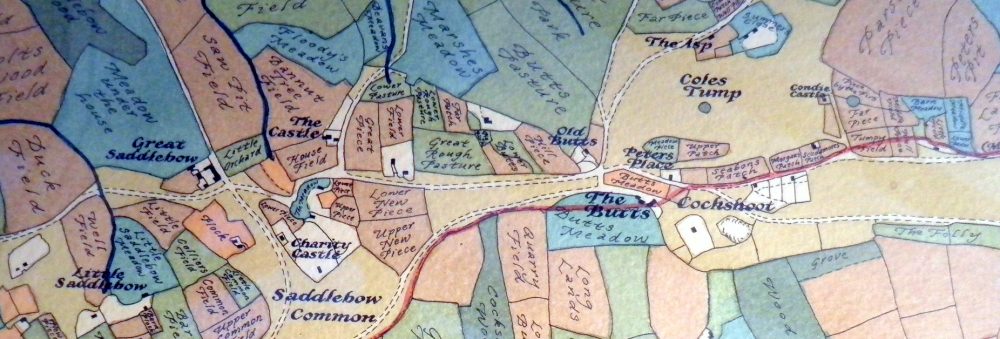
Before oil, refrigeration and global trade, towns and cities did not sit above the countryside as separate worlds. They were part of it. Every borough and city was embedded in a living web of farms, smallholdings, woods, rivers and market gardens that existed to keep it fed. But the dependence ran both ways. The countryside fed the town, and the town sustained the countryside.
The feeding ground
Every town had a feeding ground. This was the ring of land that lay within a day’s travel by foot, horse or boat. From this land came milk, vegetables, fruit, meat, eggs, grain, fish, fuelwood and animal feed. Fresh food could not be stored for long and could not be moved far. This made proximity essential.
A town could not grow larger than the land around it could feed. If harvests failed, the town suffered. If the countryside prospered, the town prospered too.
Markets as the heart of the system
Food moved through markets. Farmers, growers, fishermen and smallholders brought their produce into the borough on market days. Bakers, butchers, brewers, innkeepers and ordinary households bought directly from them.
This was not just trade. It was a social and economic bond. People knew who grew their food. Prices reflected real local supply. If one valley had a bad year, the town felt it immediately.
Markets were also where news travelled, where labour was hired, where credit was extended, and where disputes were settled. The market was the countryside’s window into the town.
Towns were also farming places
Towns did not just consume food. They produced it.
Inside and around boroughs there were:
Market gardens supplying vegetables and herbs
Dairies keeping cows for fresh milk
Piggeries fed on kitchen waste
Poultry yards
Orchards and hop gardens
Maltings, breweries and bakeries
Some towns even ran their own farms. Hereford, for example, had the Hereford City Farm, which survived into the modern period and only closed recently. It was a direct survival of the old idea that a town should have its own land to help feed its people.
Urban waste went back to the land as manure. Animals turned scraps into meat. Nothing was wasted. The town and its surrounding fields formed one working system.
The countryside depended on the town
Farmers did not live in isolation. They depended on the town for things they could not easily provide themselves.
They relied on:
Lawyers to handle land, inheritance and leases
Markets to sell produce and buy tools
Blacksmiths, wheelwrights and harness makers
Millers, brewers and maltsters
Banks, credit and money changers
Doctors, vets and apothecaries
Churches, schools and courts
The town was where rural society was organised and kept functioning. It was the administrative and commercial brain of the local food system.
Family and memory tied town and country together
Most town dwellers were not strangers to the countryside. They, or their forebears, had come from nearby villages and farms. They still had relatives working the land. They knew the lanes, the fields and the farms that supplied their bread, milk and meat.
This kept the system human. Food was not anonymous. It came from people you knew, or people you were related to.
What the industrial age destroyed
Railways, refrigeration and oil broke this balance. Food was pulled in from far away. Towns stopped needing their surrounding land. Farmers were absorbed into national and then global markets. The old local food web dissolved.
Cities became dependent on distant places they would never see.
Why the future will look more like the past
As energy becomes expensive and long supply chains weaken, towns and cities will not be able to rely on food from far away. They will have to rebuild what once existed.
Not self sufficiency in isolation, but a renewed partnership between towns and the land around them.
That is how boroughs were fed for centuries. It is how they will be fed again.
In the Vale of Aylesbury there once thrived a plum whose name told its ambition – the Aylesbury Prune. Long forgotten, it offers more than nostalgia: it offers opportunity. What if this old-local fruit could become a signature product for the locality or elsewhere?
Rediscovering a Local Treasure
The Aylesbury Prune is a little-known plum cultivar with a strong local story. It hails from the Vale of Aylesbury in Buckinghamshire, once a core fruit-growing locality to the west of the Chiltern Hills. Slow Food in the UK+2Fondazione Slow Food+2
The fruit is small-to-medium, oval, skin blue-black with a slight bloom, flesh golden-yellow, flavour sweet with a touch of acid. Slow Food in the UK+1 It ripens late (often into October), after many other plums have finished. Bernwode Fruit Trees+1
Originally grown commercially—though on a modest scale—it was once “the heart of a thriving industry for the London market”. Bernwode Fruit Trees+1 But nowadays the Aylesbury Prune is very rare. Fondazione Slow Food
Why It Matters for Localism
Localism means grounding production, processing and identity in a defined locality. The Aylesbury Prune ticks the boxes:
Grown in a definable locality (the Vale of Aylesbury, Bucks) with historical fruit-growing credentials.
A unique cultivar – not one of the ubiquitous imported plums.
Late-season harvest gives a niche window for local markets, agritourism or heritage orchard branding.
A story: heritage, place, craft, identity. Consumers increasingly value provenance.
If local producers revived the Aylesbury Prune consciously, they could build a distinct product: “From the Vale of Aylesbury’s heritage orchards” rather than “standard plum”.
What a Revival Might Look Like
Here are some steps and ideas:
Orchard revival – Identify old orchards or hedgerow trees of Aylesbury Prune in the locality. Propagate young trees (many nurseries still list them).
Harvest & processing strategy – Because of its late harvest and distinct flavour, you could market:
Perhaps dried “prune-style” product (though note many British damson-type plums don’t dry the same as Californian prunes).
Branding & storytelling – Use the heritage angle: “A fruit once shipped by canal from the Vale to London markets”, “Reviving the Aylesbury Prune orchard tradition”.
Local supply chain – Sell via farm gates, farmers’ markets, local box-schemes, gourmet shops. Use farm shop cafés, agritourism (pick-your-own), local food festivals.
Identity preservation – Tie the cultivar to the locality (Vale of Aylesbury, Bucks) avoiding generic “region”. Emphasise distinctiveness and scarcity.
Partnerships – Work with local authority food/locality programmes, heritage orchard groups, biodiversity/heritage schemes (the cultivar is listed by Slow Food UK’s Ark-of-Taste. Fondazione Slow Food+1
Challenges to Be Aware Of
Scale: The heritage cultivar may have lower yields, less uniformity, and may not match commercial standard plums in shipping/handling ease.
Processing for drying: If you aim for a “prune” style dried product, you’d need to test drying behaviour; many British damsons were not historically dried at scale.
Market development: Niche heritage fruit demands higher unit price, good branding, and consumer awareness.
Orchard management: Old trees may be at end-of-life; propagation and re-establishment take time and investment.
Supply chain consistency: Seasonal variation, fruit size/quality may vary and local labour or orchard expertise will matter.
Why Now Is A Good Moment
Consumer taste is shifting: emphasis on provenance, heritage varieties, local food narratives.
Localism is gaining traction: interest in reconnecting food production and the local foodscape.
Deep Bed Farming (DBF) is a farming method developed by the Malawian NGO Tiyeni. It’s designed to address a serious agricultural issue in parts of Malawi: a hard, compacted layer of earth (“hardpan”) just under the topsoil, which prevents roots, water and air from penetrating. This limits crop yields, causes soil erosion, and reduces water retention.
DBF involves several practices:
Breaking up the hardpan to allow penetration of roots, water, air.
Creating contour ridges and deep beds — raised beds which help with water retention, reduce runoff, and prevent the hardpan from reforming.
Changed crop rotations, use of cover crops and manure/compost, mulching etc., to improve soil health.
Aftrak is a project combining this farming technique with solar power and electric tractors, aiming to reduce labour, improve yields, and also bring electricity to rural communities. It is led by Loughborough University in collaboration with Tiyeni (Malawi), the Consortium for Battery Innovation (UK), and other partners.
Key Technical Details & Innovation
The tractor is designed as a micro-electric/solar-electric tractor (“walk-behind” style) suitable for smallholder farmers, capable of doing the hard work of preparing land for DBF.
It uses a solar microgrid / solar base station to charge batteries and provide electricity not only for the tractor but also for domestic uses (lighting, phone charging, etc.).
The tractor can cut to a depth of 400 mm (≈ 40 cm) to break the hardpan layer.
The solar array/base station and batteries are built to be modular, somewhat flat-pack to assist local assembly, resilient to local conditions. It uses lead-acid style batteries (deep-cycle, e.g. Varta) rather than more expensive lithium systems, because lead batteries handle heat more simply and cost less (though they are heavier).
Impact & Benefits Observed / Expected
Farmers using this method (DBF) have seen double or even triple yields per hectare in some cases. DBF alone (without the tractor) has already shown big gains. The tractor plus solar should accelerate that, reduce effort, allow more land to be converted, etc.
The project helps reduce labour – using hand tools (hoes, etc.) is arduous, time-consuming, and limiting (especially for older, disabled, women-led households). The tractor eases that burden.
Also brings electricity to villages that often don’t have reliable power. The base station supplies power for lighting, phone charging, possibly some small appliances etc. This can improve quality of life (education, comfort, safety) and reduce reliance on polluting or expensive alternatives.
Funding, Recognition & Deployment
The project has been funded in part by Innovate UK under its Energy Catalyst program.
In 2024, it won the Milken-Motsepe Prize in Green Energy (USD $1 million) for its innovation.
A prototype has been built and trialed in Malawi by the Tiyeni team. Loughborough also did preparatory tests (solar microgrid, tractor operation etc.) in UK settings.
Challenges & Considerations
Cost & infrastructure: Even though this is much cheaper than large tractors or fossil fuel alternatives, there are upfront costs: solar panels, batteries, the base station, and maintenance.
Maintenance & local capacity: For sustainability, local communities need to be able to maintain equipment, replace parts, and manage charging infrastructure. If the system fails, benefits reduce sharply
Scaling: Trials so far are limited; rolling out over large distances (across villages, with varied soil types, differing climates) will bring new challenges.
Battery limitations: Lead acid batteries have limitations (weight, depth of discharge, lifetime) especially under heavy use, heat, etc. But they were chosen because they are more suitable than lithium in this context given cost, availability, heat handling.
Why It Matters
This is more than just a new piece of machinery. It sits at the intersection of:
Food security: Improving yields can help reduce hunger and poverty.
Sustainability & climate resilience: Less reliance on fossil fuels, better soil health, better water retention helps resilience to climate change (e.g. heavy rains, drought).
Energy access: Providing electricity to remote rural communities can support education, health, livelihoods.
Inclusive development: Reducing physical labour is especially helpful for people less able, such as older farmers and women.
Deep digging, sometimes called conservation agriculture or pit planting, has been widely practised in Malawi and across southern Africa. At its heart, it involves turning the soil by hand to a depth much greater than the shallow reach of mechanical ploughing. Small basins are dug with hoes, spaced across a field, each designed to catch water and concentrate fertility. Plant residues, manure, and compost are placed into the basins, and seeds are planted directly into this enriched soil.
The method is labour-intensive, but it offers advantages in fragile, rain-dependent environments. In Malawi, deep digging has been promoted in response to food shortages, land degradation, and erratic rainfall. Farmers who adopted it have often reported increases in maize yields even without fertiliser. The technique also reduces runoff and soil erosion, making it particularly useful on sloping land. Importantly, it makes productive use of human effort at times when money for inputs or machines is scarce.
From the perspective of the shrinking economy, deep digging is more than an agricultural curiosity. It represents a different logic of production — one based on human energy and local knowledge rather than imported energy and global supply chains. Where industrial agriculture seeks to reduce labour and maximise scale, deep digging accepts labour as abundant and turns it into an asset. In a world where discretionary industries shrink, releasing people from jobs in services, tourism, and retail, this redirection of human effort becomes vital.
Britain itself once relied on labour-intensive methods not unlike deep digging. Before the widespread use of tractors, spades and hoes were the tools of market gardeners and smallholders. Allotments in urban and rural settings produced a significant share of vegetables, and wartime “Dig for Victory” campaigns mobilised household labour on a massive scale. While conditions in Malawi and the UK differ greatly, the underlying principle — that human work can substitute for missing machinery or fertilisers — remains relevant.
For localism, the practice fits naturally into the vision of resilient communities. Deep digging is best suited to small plots, whether in gardens, community farms, or smallholdings. It strengthens local autonomy by reducing dependency on imported fertiliser and fuel. It also brings people together in shared work, reinforcing social bonds as well as food security. Unlike industrial farming, which empties the countryside of people, deep digging fills it with activity.
As the economy contracts, and as fossil-fuel based systems weaken, we are likely to rediscover the logic of such approaches. Malawi’s experience shows that even in tough conditions, food can be grown through ingenuity, human effort, and the careful management of water and soil. For Britain, the lesson is not to transplant the method directly, but to learn from its principles — depth of preparation, concentration of fertility, and reliance on human skill rather than distant inputs.
In the years ahead, deep digging offers both a practical technique and a metaphor. It reminds us that resilience in a shrinking economy depends not on the breadth of global trade, but on the depth of local capacity. By drawing on human labour and local knowledge, societies can create food systems that endure when industrial supports falter.
Across Britain, a quiet transformation is underway. Behind the headlines of recession, redundancy, and rural decline, a new economic relationship is forming between farmers in distress and town-dwellers out of work. It is modest, improvised, and mostly unrecognised, but it may lead to a more resilient future.
In the traditional countryside, many farmers are in agony. Margins are shrinking, costs are rising, and weather patterns are becoming extreme. Markets are volatile and dominated by supermarkets, middlemen, and distant regulations. For thousands of small and mid-sized farms, survival now means selling off pieces of land or going deeper into debt. Younger generations are leaving, and many older farmers have no one to hand their holdings to.
At the same time, in towns and suburbs, the collapse of the consumer economy is creating a new kind of displacement. As discretionary industries shrink—retail, hospitality, media, and professional services—people are being made redundant. For some, the shift is manageable. For many, it is not. Unable to find work, pay rent, or afford urban life, many are looking to the countryside for something more elemental: a place to live modestly and work the land.
Often, this begins with a conversation. A would-be smallholder approaches a farmer, asking to buy or lease a small piece of ground—perhaps half an acre, sometimes less. The land may be marginal, steep, or underused. The arrangement is usually informal. What the buyer wants is not profit but subsistence—a polytunnel, a few chickens, some vegetables, and a basic shelter—a life pared down to essentials.
Some farmers are saying yes.
A New Rural Relationship
A new rural economy is being born in these small, informal agreements. It doesn’t conform to the categories used by planners or economists. It is not focused on exports or yields per hectare. It is based on need, trust, and mutual benefit.
For the farmer, selling or leasing a corner of land can provide ready cash or reliable help. For the newcomer, it offers a foothold, a chance to become self-reliant in a world where conventional opportunities are drying up. Sometimes rent is paid. Sometimes it is exchanged for labour—fencing, lambing, hedge-laying. Tools and skills are shared. Fences are repaired. Sheds are re-roofed.
This is not the romantic ruralism of television or glossy magazines. It is post-industrial agriculture: human-scale, low-energy, and largely informal. It depends more on wheelbarrows than tractors, and more on hand tools than apps. It’s a return to practicality born not of nostalgia but of necessity.
Working the Edges
The work happens in the gaps—on field edges, neglected paddocks, and forgotten orchards. Produce is grown for home use or sold at the gate. Water may be harvested, power improvised, and structures made from salvaged materials. Compost toilets and solar showers are standard. There is little money, but much utility.
Increasingly, these smallholders form micro-communities. Advice is shared. Seeds are swapped. Some even coordinate planting and harvesting, or set up informal food exchanges. The work is hard, but purposeful. Children grow up with soil on their hands. Grandparents find new dignity in shared labour. Life slows, but deepens.
In time, these scattered plots may connect into a rural patchwork of resilience: not villages in the traditional sense, but networks of subsistence—places where people meet their own needs, and each other’s, without relying on distant systems that are no longer dependable.
The Planning Puzzle
This transition is not without tension. Planning law in the UK remains rooted in the industrial and post-war assumption that rural land must be tightly controlled, protected from “inappropriate development.” Permanent living on farmland is usually prohibited unless the occupant is engaged in commercial-scale agriculture.
But the present does not need to fit the logic of the past. If people cannot afford to live in cities and farms can no longer afford to operate at scale, surely there is wisdom in allowing new forms of habitation and land use, especially when they are modest, low-impact, and essential to wellbeing.
Local authorities face a stark choice: enforce old rules that exclude new livelihoods, or begin to recognise that a shift is underway—and find ways to support it. A more permissive, humane, and adaptive planning framework could allow thousands of people to live and work on the land, relieving pressure on housing, food supply, and social support systems.
An Unlikely Alliance
This evolving partnership—between farmers with too much land and workers with none—may be one of the most hopeful developments in Britain’s economic landscape. It is not driven by ideology or investment. It is rooted in the soil, the seasons, and the search for meaning and survival.
Farmers have long been told to “get big or get out.” But some are now choosing a third path: to get local. To become stewards of change rather than victims of it. By allowing smallholders onto their land, they may secure their own futures—not through subsidies or speculation, but through solidarity.
And for those arriving from town, this isn’t a retreat from society—it’s a rebuilding of it, one raised bed and shared spade at a time.
As the old economy buckles under its own weight, a lighter, smaller, slower one is taking root. You won’t see it in GDP figures. But you might see it at the end of a farm track, where someone is putting in a gate, planting beans, and beginning again.
In a world where the once-reliable rhythms of nature—spring rains, summer heat, autumn harvests—have been thrown into disarray, humanity will face an unprecedented challenge: learning to grow food without the guidance of seasons. The collapse of these natural cycles will disrupt farming and force a radical rethinking of how humans interact with the earth. In this new context, preternatural farming will emerge—a combination of ancient knowledge, innovation, and adaptation to a world in flux.
1. The Death of Seasons
As climate change progresses, the predictability of seasons will erode. Droughts may persist for years, followed by unexpected floods. Heatwaves could strike in the middle of winter, and spring frosts might return in the middle of summer. Traditional farming methods based on seasonal cycles will no longer be viable. Farmers will have to abandon the idea of seasons entirely and adopt new ways of interacting with their environment.
The unpredictability of weather patterns will mean that farming communities must become far more agile and responsive to the land’s immediate conditions.
2. Controlled Ecosystems: Regenerative and Adaptive Agriculture
Without the guidance of seasons, future farmers must create self-contained ecosystems that sustain crops under highly variable conditions. This could involve:
Regenerative agriculture: Building soil health through no-till farming, composting, and integrating livestock, which can help buffer crops from extreme weather.
Polyculture farming: Growing a variety of crops in the same space to increase resilience. Diverse ecosystems can better survive shocks like floods or heatwaves, as some species will naturally adapt to the changing conditions.
Perennial crops: Shifting to plants that don’t need to be replanted every year can reduce the vulnerability of food systems. These crops can survive for multiple years, providing food even when conditions make annual planting impossible.
The loss of seasons will also spur technological innovation that allows farmers to manipulate their local environment. Greenhouses, hydroponics, and aeroponics may become more widespread, allowing plants to grow in controlled environments regardless of external weather patterns.
3. Water Management: The Key to Survival
Without reliable rainfall patterns, water will become the most precious resource for future farmers. Ancient techniques like rainwater harvesting, once employed in arid regions, will become critical worldwide. Communities will need to:
Develop underground reservoirs or cisterns to store water during unpredictable rain events.
Utilize desalination technology in coastal regions to access freshwater from the oceans, a practice already in use but likely to expand.
Invest in water recycling systems that capture and reuse every drop, reducing dependence on natural sources.
Future farming may also depend heavily on irrigation systems that adapt to new weather extremes, such as drip irrigation to minimize evaporation in heatwaves or raised beds to prevent crops from being washed away during sudden floods.
4. Biodiversity and Genetically Modified Resilience
In the face of chaotic climate patterns, farmers will also need to cultivate crops that are genetically or naturally adapted to harsh, unpredictable environments. Future farming could involve:
Genetically modified organisms (GMOs) are designed to withstand extreme weather events like heat, drought, and flooding.
A return to indigenous crop varieties cultivated over centuries to survive in harsh, changing conditions. These crops often have a deep resilience that modern monocultures lack.
Communities may also begin experimenting with seed banking—storing vast collections of diverse seeds to ensure that, as conditions change, they always have varieties available to survive the new normal.
5. The New Preternatural Knowledge: Reading the Signs
Though traditional seasons may no longer exist, humans must develop new ways of reading the earth’s signals. These signals may not be tied to calendar dates or typical weather patterns but instead to more subtle environmental shifts. Farmers might rely on:
Soil sensors: Technology to monitor moisture levels, nutrient availability, and soil temperature, allowing them to make real-time decisions about when and what to plant.
Climate forecasting technologies: Advanced models and AI to predict short-term microclimates in regions where broader seasonal patterns have broken down.
Biological indicators: Changes in animal behaviour or plant life that serve as early warnings of shifts in weather or climate conditions. For instance, the migration of birds or the blooming of specific flowers may no longer follow seasonal norms but could still serve as cues for farming actions.
This new preternatural knowledge will be a blend of high-tech and ancient observation. Farmers will rely less on long-term planning and more on responsive action—moving quickly to adapt to whatever the land presents.
6. Rituals of Adaptation: Living with Uncertainty
Without predictable cycles, the future will require new farming methods and a shift in worldview. Societies that once celebrated the harvest or planting season will now create rituals of adaptation, where the unpredictability of the environment is embraced, and flexibility is celebrated.
Resilience festivals: Communities may develop new cultural practices that honour the flexibility and strength required to survive in a world without seasons.
Rituals of protection: In ancient times, people performed rituals to appease nature spirits or gods to ensure bountiful harvests. In the future, rituals may be geared toward protecting crops from extreme weather, honouring the forces of nature, and celebrating innovations that help communities thrive despite the odds.
This shift in culture and mindset will be essential to survival. Communities that can find ways to embrace uncertainty will be better equipped to live in a world where nature no longer follows a reliable pattern.
Conclusion: Farming Beyond Seasons
As the world transitions into an era where climate unpredictability is the new normal, the old ways of farming tied to seasons and cycles will become obsolete. In their place, a new form for preternatural agriculture will emerge, rooted in innovation, adaptation, and a deep understanding of the ever-shifting natural world. This farming system will be a fusion of ancient wisdom, cutting-edge technology, and a profound respect for the unpredictability of nature.
Future farmers will no longer be guided by the predictable passing of time but by the immediate needs of their environment. By cultivating resilience in their ecosystems and communities, they will learn to thrive in a world where seasons no longer exist.
Heating biomass in a zero-oxygen environment to temperatures of 250°C or greater yields energy-rich gases and liquids, and a solid charcoal, or char.
When this char has been produced specifically to have beneficial effects – for example as a soil improver or to store carbon – we call this material biochar.
The thermal process used to produce biochar is known as pyrolysis, and by altering the pyrolysis conditions, it’s possible to change the character of the biochar. In general higher pyrolysis temperatures mean a smaller amount of char, but containing a greater proportion of highly stable carbon.
This carbon seems to remain sequestered in biochar for centuries, and so sustainable biochar production could be a powerful tool in the fight against anthropogenic climate change.
There is strong evidence that biochar can also have some beneficial effects when added to soils. Its highly porous structure can act like a slow-release ‘sponge’ for water and useful soil nutrients.
Biochar can be made from almost any type of dry biomass – including waste materials. Therefore, biochar production could be an enormous opportunity for ‘closed-loop’ type resource management, with numerous valuable benefits.
It is good. It was an eye-opener because it introduced me to systems thinking about agriculture. It’s a super holistic way by a farmer who practices what he writes.
I am grateful to Karl North for providing an introduction to his essay:
This paper is a synthesis of my study of ecosystem science and the science of human society for sixty years, and the results of my efforts for forty years as a farmer to apply what I have learned to the design of agroecosystems. The single most important analytical principle I derived has been the imperative to see everything in systemic context, both historical and spatial, a principle that is evident in the paper’s premises.
The paper draws on my experience as a writer, which began as a member of a group that studied and educated about the energy descent – a future of radically diminishing energy due to global depletion – and published their writing about local strategies to adapt to that future. The paper also draws on my design and teaching of an undergraduate course in ecological agriculture for several years. Also useful has been my training as a teacher of Holistic Management, a decision-making framework created by ecologist Alan Savory.
The author concludes that, as the oil age wains, industrial agriculture, its associated large-scale farms and distance food economy will be less affordable and will fade away. This will provide the opportunity to return to small farms that serve a local economy.
This 90 minute Roundtable podcast in Nate Hagens series the Great Simplification is fascinating.
There are so many lessons which are relevant to the UK.
To see the original go to https://youtu.be/lb2tJXopTJA __________________________________________________________________________________________________-
The four speakers are as small-scale farmer Jason Bradford, permaculturist and documentarian Andrew Millison, regenerative agriculture activist Vandana Shiva, and regenerative farmer and educator Daniel Zetah discuss the feasibility of a food system fully or mostly independent of fossil fuel inputs.
While a non-industrialized agriculture system is certainly possible (it was the norm for the majority of human history), what that will look like and how we even begin such a transition is daunting with a population of 8 billion humans to feed.
Jason Bradford has been affiliated with the Post Carbon Institute since 2004, first as a Fellow and then as Board President. He worked for the Center for Conservation and Sustainable Development at the Missouri Botanical Garden, was a Visiting Scholar at U.C. Davis, and during that period co-founded the Andes Biodiversity and Ecosystem Research Group (ABERG). He decided to shift from academia to learn more about and practice sustainable agriculture, and in the process, completed six months of training with Ecology Action (aka GrowBiointensive) in Willits, California, and then founded Brookside School Farm.
Andrew Millison is an innovative educator, storyteller and designer. He founded the Permaculture Design education program at Oregon State University (OSU) in 2009. At OSU Andrew serves as an Education Director and Senior Instructor who offers over 25 years of experience, and a playful approach to regenerative design. Andrew is also a documentary videographer who travels the world documenting epic permaculture projects in places such as India, Egypt, Mexico, Cuba, and throughout the US. You can view his videos and series on his YouTube channel.V
Vandana Shiva is a well known activist, author of many books, and is a global champion on regenerative local agriculture, biodiversity and nutritious food. She has a PhD in physics and 40 years ago founded the Research Foundation for Science, Technology and Ecology, an independent research institute that works on the most significant ecological problems of our times.
Daniel Zetah grew up on a farm in Minnesota where he learned to fix all manner of things driven from an insatiable curiosity about how things worked. He studied economics and business at university. After waking to our planetary predicament, he became a full time environmental activist, then moved to an off grid community in the mountains where he studied permaculture and built straw bale houses. He moved back to America to help steer culture in a more sane direction. He and his wife Stephanie moved back to the family farm in Minnesota where they are growing 80% of their calories, rebuilding the local ecology, and educating and empowering people to wrest back control of their sovereignty as human beings.
How do we teach people the skills they’ll need as fossil inputs become less affordable, reliable, and accessible? Can we create a cultural shift towards a slower lifestyle that is more connected to the land which provides us food? What do the people of a society look like where we are once again centered around agriculture and in tune with the flows of nature? How would our relationship with jobs and the land have to change?
Alan Bates: We are in a crisis in the evolution of human society. It’s unique to both human and geologic history. It has never happened before and it can’t possibly happen again.
Full fossil fuel price reform would reduce global carbon dioxide emissions to an estimated 43 percent below baseline levels in 2030 (in line with keeping global warming to 1.5–2°C) while raising revenues worth 3.6 percent of global GDP and preventing 1.6 million local air pollution deaths per year.
— International Monetary Fund
The United States is borrowing three billion dollars a day with higher interest rates we’re going to borrow one and a half trillion dollars in the second half of this year.
— Nate Hagens, Frankly #41
Three trillion per year in borrowing doesn’t seem like that much when you consider that the world spends twelve trillion to subsidize fossil energy exploration, exploitation, delivery, and use. Of course — and this is something deficit hawks will never tell you — borrowing trillions carries vastly more benefits than it may appear.
Most people, and this is how we are educated as children, think that when you borrow a dollar, pound, or Swiss franc, you are taking it out of the lender’s pocket and placing it into the borrower’s. It is like breaking the piggy bank. But that is no longer how money works. Since we all went off the gold standard and onto bank notes, all money is lent into existence. When a loan is retired, the money does not go back into the glued-together piggy bank, it ceases to exist. What had been strings of ones and zeros is zeroed out.
If the Fed were to stop lending three billion dollars a day, the economy of the US, and by extension the world, would seize up, implode and crumble into dust. Issue more money and the global economy expands. Issue less, it contracts. Try telling that to Marsha Blackburn or Nikki Haley and you’ll get a blank stare. Such ideas don’t play in Iowa like images of broken piggy banks and Joe Biden caught holding the hammer.
Every year the world subsidizes fossil energy adds 12 trillion dollars to the global economy. Take that away and you are in a fine pickle. You had better find something else to spend it on, and quick.
Here are a few items from my shopping list. All of these are steps along the way to a New Carbon Economy, one that mines greenhouse gases from the sky, burns them for energy, and then buries the carbon waste underground, essentially forever. If you’d like a job with this new industry of mining the sky, have a look at Air Miners.
1. Produce Biochar
Biochar is the foundation for the new economy because it is safe, scalable, and shovel-ready. It is made by taking plants (which make withdrawals from the carbon cycle to grow) and preventing the return of their carbon when they die by baking it into a mineral form. That nearly pure carbon mineral is enormously useful. As a soil amendment or animal feed, it retains water, aerates, encourages microbial biodiversity and nutrient density, electrifies soil chemistry, reduces the need for antibiotics and agri-chem, and produces spectacular gains in photosynthetic productivity and drawdown not only of carbon, but of methane, nitrous oxides, sulfur oxides, and other greenhouse gases. The non-agricultural applications are even more spectacular: carbon fibers; films and filaments; electronic circuits; batteries and fuel cells; supercapacitors; polymers; epoxies; aerogels; water filters; carbon concrete and asphalt; carbon steel; medical treatments; implants and prosthetics; cosmetics; and deodorizers. Concrete is the #1 man-made material in the world. 4.4 billion tons are poured every year, accounting for 7–10% of CO2 emissions. Up to 8% biochar addition actually strengthens concrete as much as 30%. That is 1.3 GtCO2e/y CDR potential (1.3 billion tons greenhouse gas withdrawal per year) for a single market before you factor in abatement value.
2. Grow Forests On Land
As we discussed in last month’s posts, Thinking in Wholes; Peak Carbon; Missing the Ecosystems for the Trees; and Drey’s Challenge, forests cannot remove all the three trillion tons of legacy manmade greenhouse gases from the atmosphere and restore the pre-industrial climate humans evolved within, but they might get us halfway there. Contrary to popular mythology, they can do that without diminishing food supply, increasing albedo, or suffering catastrophic loss to ice, wildfire, and flooding.
3. Grow Forests Under the Sea
As we will discuss in future installments (stay tuned!), the limitations of Earth’s land surface are less problematic on the other 70% of the planet — the water bodies. Restricting factors tend to be nutrient flows, temperature, pressure, and sunlight. About 30 million years ago, giant kelp and seagrass meadows flourished and expanded along coastlines. These forests are complex ecosystems that support many interconnected food webs at all trophic levels. Like their landed counterparts they have canopies, understories, and forest floors that suck carbon like it was a Big Gulp from the 7–11. They can be and are being harvested for salads, sushi, and essential oils. Afterwards the “crop residues” can be charred to become soil amendments or many of the myriad products and services of the new carbon economy.
4. Recover Wetlands and Regenerate Ecosystems
Wetland peats are vast carbon stores, around half or more of all soils, and instead of increasing these sinks, we are destroying them, draining them, and allowing the soil to oxidize to CO2. Since wetland peat soils can be nearly half carbon, wetland restoration is the most effective way to store soil carbon. Besides freshwater swamps, enormous carbon possibilities exist in marine wetlands, mangroves, and salt marshes (so-called blue carbon). As biogeophysicist Thomas J. Goreau reminds us:
“Without global-scale restoration, it is simply impossible to store enough carbon to meet the global needs, so large-scale restoration of destroyed, degraded, and damaged ecosystems is the sine qua non for stabilizing climate at safe levels. The methods to do so already exist. All that is lacking is the will on the part of policymakers and funding agencies to solve global problems on a global scale.”
5. Remineralize
In their masterpiece anthology, Geotherapy, the Down-to-Earth Solution to Global Warming, Thomas J. Goreau, Ronal W. Larson, and Joanna Campe highlighted the importance of remineralization as at least equal to, if not greater than, the discovery of biochar. One of the ways that biochar provides such miraculous performance in soils is by supplying favorable habitats to soil microbes that do the heavy lifting of nutrient delivery to plants. Microbes can’t do that without steady supplies of nutrients, so having available minerals is essential. Mineralization is a natural cycle that works in tandem with the ebb and flow of ice ages — retreating glaciers grind rock. Remineralization is nature’s way of regenerating badly depleted and abused soils.
6. Increase Albedo
Albedo (not to be confused with libido) is an expression of the ability of surfaces to reflect sunlight (heat from the sun). Light-colored surfaces return a large part of the sun’s rays back to the atmosphere (high albedo). Dark surfaces absorb the light (low albedo). One measure of the imbalance in Earth systems is energy reaching the surface, which is denominated in Watts per square meter. The Earth added nearly 0.5 watts over every square meter of Earth’s surface over the past 50 years (since 1971); More recently (2006 to 2020), that increased to more than 0.75 W/m2. Most heat entered the ocean (89%). We need to reflect more back to space. New paints and construction materials can do that. We need more white roofs, more white highways, and more white cities. We need to help the poles to refreeze.
Show me the Money
So now let’s crunch some numbers and see what these top priorities might be able to do if they had $12 trillion per year to work with.
1. Produce Biochar
Of course, since biochar provides many commercial products and pyrolysis generates heat, biochar earns money, rather than requiring it, but suppose we wanted to scale biochar production to use all biomass residues presently wasted and turned into pollution, and we wanted to do it fast?
First, what is the available global biomass residue resource? Dees, et al (2017) give 0.1 t/ha dry mass weight for average crop residues from vineyards, fruit trees, olives, citrus and nuts, grasslands, cereals, straw, and legumes. Let us say that at ultimate scale, we could recover 90% of the 4,889 Mha of these crop residues annually, or 439 million tons. Converted to biochar at 45% process efficiency and 75% net carbon content, that yields 148 MtC/y removal or 544 MtCO2/y. Some estimates are higher, but let’s go with half a gigaton per annum.
Since all human-caused emissions of greenhouse gases in 2023 will be about 50,000 MtCO2e, to maintain the consumer civilization pollution at that level would require 92 Earths of crop residues. Fortunately, biochar is not limited to crop residues as its only feedstock, but also has a constant supply from forests and, increasingly, from aquatic plants, as well as municipal wastes like sewage and plastic. That said, the total feedstock supply would need to rise to 92 times crop residues to counterbalance present emissions. However, if emissions were to drop to 10% of today’s (5 GtCO2e/y), the many uses of biochar could absorb a significant part of that.
In general, biochar now costs between $200 and $600/ton to produce, deliver, and spread on fields (Shackley et al. 2011). Subsidizing that full cost and applying it to the crop residuals potential would therefore cost $13.5 to $35.6 billion per year, just for the fertilizer and energy benefits. Percentage of our annual $12 trillion budget: 0.1 to 0.3%.
2. Grow Forests On Land
Recent research suggests a global average of $2,328/ha for forest restoration (a metric hectare is 2.47105 English acres). Estimated costs to generate a forest are as low as $1,250/ha for natural regeneration that only requires fencing and up to $3,750/ha for tree planting and fencing in Brazil’s Atlantic Forest. In our post on Missing the Ecosystem for the Trees, we indicated that 900 million hectares are available right now for afforestation/reforestation without impacting farmland, cities, or parks. Net drawdown: Depending on where they are planted and the richness of the soil and annual rainfall, trees remove CO2 at annual rates ranging from 4.5 to 40.7 tons per hectare. Our new 900 million hectares will remove 4 to 37 billion tons CO2/y, 60% in above-ground (and potentially profitable but vulnerable) century-long storage, and 40% in below-ground longer-term storage. Cost to reforest: $1.1 to 3.4 trillion total (not yearly), with an estimated 9x twenty-year ROI based on the Pioneer Forest experience.
Percentage of our annual budget amortized over 20 years: 0.5 to 1.4%
3. Grow Forests Under the Sea
As we scale kelp and seaweed farms, generally called “marine permaculture,” from one-hectare prototypes to 1000 ha. production modules to megahectare scale, capital costs drop to $30,000/ha establishment (about ten times the cost of forests on land). Each hectare will harvest 60 to 100 tons/y in CO2 removal annually and 200–300 times that in reduced and avoided emissions. It also produces a very large feedstock for biochar after primary product life cycles.
Suppose we establish 1 MHa/y of new kelp forest. (about the size of the Netherlands). Cost $30 billion. Percentage of our annual budget: 0.25%.
4. Recover Wetlands and Regenerate Ecosystems
Though they cover only around six percent of the Earth’s land surface, 40 percent of all plant and animal species live or breed in wetlands. The amount of organic carbon entering the ocean from marine primary productivity and from rivers and coastal wetlands exceeds the amount of organic carbon being buried in marine sediments (Hedges, 1992; Smith and McKenzie, 1993; Berner, 2004). Wetland carbon and marine mangrove and sea grass carbon may be equivalent in magnitude to soil, but current estimates are too poor to show that conclusively. USDA has spent more than $4.2 billion on wetland restoration and protection over the last two decades. To restore or protect all 2,400 discrete areas of large wetlands in the world (630 MHa), at USDA expense rates, could cost $170 to 6100/per acre or $265 billion to $9.5 trillion. Still within budget. We could do that in just the first year of our newly allocated spending.
Percentage of our annual budget: 0.2–79%.
5. Remineralize
We are in luck! The very minerals soils need can be found wherever there is building and road construction using stone aggregates or concrete. No extra energy is needed to grind them up since it is a waste by-product of gravel plants. After seawater, silicate rock is the most abundant resource on earth. In contrast to chemical fertilizers, rock powders are a natural material, not a synthetic one, so production costs are much lower than for chemicals that must be extracted and refined into pure form or synthesized like ammonium or urea. But suppose it were not so. Suppose remineralization costs the same as fertilizer. Let’s take the present cost of fertilizers (which are heavily subsidized) and instead provide millions of tons of rock dust appropriate for soil and forest regeneration for free. Cost: $200 billion per year. Let us double that and provide a subsidy of $400 billion, just to jumpstart the conversion.
Percentage of our annual budget: 0.33%.
6. Increase Albedo
A small startup in Tennessee, Carbon Crossroads LCC, began in 2022 with experiments in replacements to asphalt using biochar instead of fossil bitumen. The latest formulations are a 100% replacement — zero fossil. That eliminated the toxic, carcinogenic impact of asphalt road surfacing, but it left intact the negative albedo. Blacktop is, well, black. So now Carbon Crossroads, with partner BlueWorld Carbon, is moving ahead in lab testing a mixture of biochar and diatomaceous earth (think White Cliffs of Dover), that would put lighter, reflective surfaces on roads and other asphalt-like surfaces. We can paint our roofs white. We can make white cities. Cost to commercialize: One unicorn billion would be very nice, thank you.
Let’s throw the remainder — 1.863 trillion — at research to try to shade the polar and Greenland ice sheets using a suite of geoengineering tools whose safety and efficacy are still unknown. It is a gamble, I know, but we have the money to do the modeling.
Percentage of our annual budget: 15.5%.
Conclusion
If we add up my dream budget it comes to
Biochar — 36 billion — 0.3%
Reforestation — 170 billion — 1.4%
Kelp and Seaweed — 30 billion — 0.25%
Wetlands — 9.5 trillion — 79.1%
Remineralization — 400 billion — 3.3%
Albedo — 1.9 trillion — 15.5%
TOTAL: $12,000,000,000,000 or 100% of what we are currently spending each year to pad the pensions of oil executives and their congressional cronies.
From the above discussion, it can easily be seen that a simple change of incentives could work miracles. We need not penalize oil companies or lock up their executives, we just need to take away the slush funds. Put it where it matters. Do it now.
One more point about the money system. It is all a Ponzi scheme, in case you did not already realize that. Money is only worth what people agree to say it is worth. It is entirely artificial — a human invention. In some ways, it is a debt obligation on future production of energy and goods, which is to say indebting future generations to add comfort and leisure to the present ones. In another way, it represents the irretrievable loss of species, depletion of nonrenewable resources, and degradation of the quality of life of all future beings.
It need not be that way. Saner, more rational systems of ecological, regenerative economics have long been proposed and continue to be developed and experimented with every year. Those most invested in the old game have the least willingness to switch to a new one. That is not surprising. Young people need not go along with that. They can go their own way at any time. Freedom and sanity beckon.
References
Anttila, Perttu, and Hans Verkerk. “Forest Biomass Availability.” Forest Bioeconomy and Climate Change. Cham: Springer International Publishing, 2022. 91–111.
Benner, Ronald, et al. “Bulk chemical characteristics of dissolved organic matter in the ocean.” Science 255.5051 (1992): 1561–1564.
Bernal, Blanca, Lara T. Murray, and Timothy RH Pearson. “Global carbon dioxide removal rates from forest landscape restoration activities.” Carbon balance and management 13.1 (2018): 1–13.
Berner, Robert A. The Phanerozoic carbon cycle: CO2 and O2. Oxford University Press, 2004.
Goreau, Thomas J., Ronal W. Larson, and Joanna Campe, eds. Geotherapy: Innovative methods of soil fertility restoration, carbon sequestration, and reversing CO2 increase. CRC Press, 2014.
Hansen, LeRoy, et al. “Targeting investments to cost-effectively restore and protect wetland ecosystems: some economic insights.” Economic Research Service ERR-183, February (2015).
Hedges, John I. “Global biogeochemical cycles: progress and problems.” Marine chemistry 39.1–3 (1992): 67–93.
Mitra, S., R. Wassmann, and P. L. G. Vlek, 2005, An appraisal of global wetland area and its organic carbon stock, Current Science, 88:25–35.
Shackley, Simon, et al. “The feasibility and costs of biochar deployment in the UK.” Carbon Management 2.3 (2011): 335–356.
Yang, D. I. N. G., et al. “Potential benefits of biochar in agricultural soils: a review.” Pedosphere 27.4 (2017): 645–661.
Extract from discussion in the Surplus Energy blog:
A friend of mine in Texas is building a large half-buried greenhouse. Putting the plants down in the ground several feet gives them the more stable climate they need. The trick was widely used in what is now southern Russia. But it was very labor intensive. The question now is whether we use our remaining energy to build sunken greenhouses or shoot it off into space dreaming about Martian colonies.
In this episode, Nate is joined by Daniel Zetah, who practices regenerative agriculture on his family farm in Minnesota. Daniel shares his experiences in becoming aware of the global challenges we face and his journey back to his family farm, where he has been instrumental in naturally cultivating the land back to life again.
Two extracts from the conversation:
Nate:What about young people? What sort of recommendations would you give to a young human listening to this program?
Daniel:The first thing I tell young people is, if your future plans look anything remotely like what your parents did, you’re doing the wrong thing. Honestly, if you’re paying attention at all, you have to recognize that we are in a position that we’ve never been in as a species and it’s dire. We need radical changes to get enough resiliency to ride this wave that is coming behind us. And if you are not actively choosing something radical like, “I’m not going to go to college. I’m not going to get myself into a huge amount of debt. I’m going to instead go learn and work on farms to be able to learn how to grow food. Learn how to identify plants. Learn how to build something, to do anything with your hands.” If you’re not doing those things, you’re setting yourself up for failure. You’re setting the entire species up for failure.
AND
Nate:Daniel, What salient discreet advice or recommendations do you have to the listeners who are aware of the global meta crisis at this time?
Daniel: Simplify now and beat the rush. I can’t tell you how many of my urban friends, and I have fewer and fewer urban friends every year. It seems like the vast majority.
Nate: Why is that?
Daniel: I’m getting to the point where I have fewer and fewer friends that are living in urban areas unless they’re willing to get out. Unless they actually want… If they want advice and they like, “Okay, I want to do this.” I’m like, “All right, I’m going to be your buddy.” Because I want to help everybody. I want to empower everybody to become a more sovereign individual. But if they’re not interested in doing that until the collapse, no, I don’t have time for that.
**
This all reminds me of 43 years ago when we moved into an area of Herefordshire where almost everyone had lived all their lives. Until the 1960s, they had lived without mains water or electricity. Many of the cottages had earth floors. Some were uninhabitable upstairs because of leaky roofs. The members of the parish council were all long-lived locals.
They had knowledge and experience in looking after their cottages and animals, inherited from their forebears. It was a kind of indigenous culture in the modern world.
I remember talking to a local, probably in his 40s. He drove a refurbished GPO Morris Minor van. But he had never been further than Ross-on-Wye, 11 miles away. He was proud of it.
Now, in our lane, about two miles long, all but three of the 25 dwellings are occupied by incomers, including us. The members of the parish council are now all incomers.
Our area has lost the inherited ability to understand and survive the oncoming era when living off the land and looking after your own home will be so important.
Regenerative Agriculture, new to me, would be possible if the locality had maintained the old ways. They didn’t have much money to invest, and this kind of farming doesn’t require much investment in things.
Finally I like Daniel’s advice to school leavers – thatif your future plans look anything remotely like what your parents did, you’re doing the wrong thing.