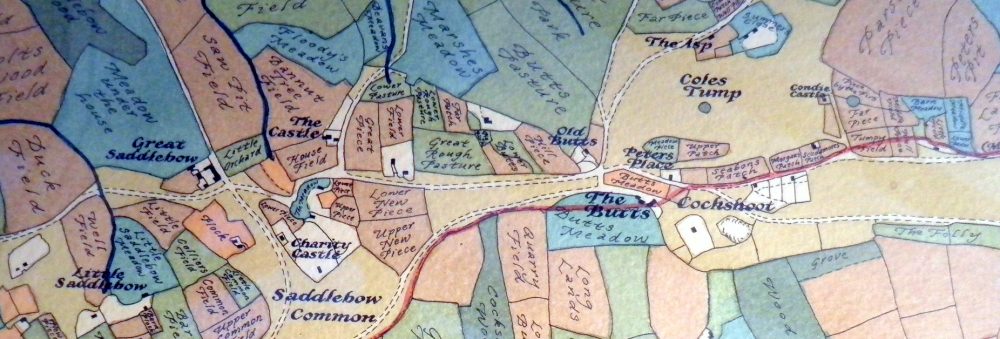
Boundaries and Belonging in the Western world was built on the power of fossil fuels. Coal, oil, and gas released more energy in a century than wood and muscle had done in thousands of years. They allowed cities to sprawl, food to travel, and people to live far from the sources of what sustained them.
Now that age is ending. As the fossil-fuel economy contracts — through depletion, cost, and climate constraint — its vast systems begin to shrink. The future will be slower, more local, and more dependent on renewable energy from the land itself. Out of this contraction will grow a new pattern of life: the wood economy.
The Natural Form of Localities
A locality is a human-scale ecosystem — a place defined not by lines on a map but by what can be sustained within its reach of energy and resources. Its extent depends on population density, terrain, and the effort needed to move people, goods, and ideas.
In the countryside, where populations are sparse, a locality may cover several former parishes, linked by woodland, water, and tramway. In towns it may be no more than a few streets and workshops clustered around a market square. Each finds its natural limit where daily cooperation and personal knowledge can still hold.
Dorothy Hartley, writing in Made in England, reminded us that water gathers in valleys and that “man follows water.” The mill stood where the stream turned, and cottages grew around it. In the coming age, those same patterns will return. Localities will once again form along rivers, ridges, and catchments, for water defines both boundary and lifeblood.
From Parishes to Localities
The ancient parishes of England were never arbitrary. Their lines often followed tribal lands, ridgelines, or watersheds — boundaries that made sense to people who walked them.
As the industrial framework recedes, those old contours will quietly reassert themselves. Localities will emerge around shared coppices, mills, and meeting halls. They may overlap or divide, depending on geography and population. The essential unit will be small enough for familiarity, large enough for self-reliance.
Energy descent makes smallness practical again. Without cheap fuel, long-distance commuting and centralised services fade. Authority and accountability return to where people can see one another’s work.
Cities Dividing into Localities
Cities were once groups of villages. London, Birmingham, and Manchester all began as loose clusters of settlements that later fused together under coal and steam.
As fossil-fuel energy declines, this process reverses. Cities will redivide into localities — self-managed neighbourhoods with their own gardens, workshops, and shared facilities. Electric grids may fragment; heating will become localised; transport will slow. The metropolis will soften back into a constellation of distinct communities, each aware of its boundaries and its dependence on nearby others.
This is not collapse, but re-formation — the industrial city returning to its village roots, adapted to a lower-energy future.
Population and Scale
The functioning size of a locality depends on density and resources. Rural localities may sustain a few hundred people across wide acres; urban ones may include several thousand. Beyond that, personal accountability fades and bureaucracy returns.
Sociological research supports this. Communities of about five hundred to five thousand can manage their own economies and decision-making without rigid hierarchies. It is roughly the range in which people can know one another by face and reputation — the foundation of trust.
Water and Power
Water is both a boundary and an energy source. Streams, rivers, and valleys determine settlement, as they always have. Water mills will return to importance — grinding grain, sawing timber, pressing oil, or generating small amounts of electricity.
Each catchment becomes a cooperative system: those who live upstream must safeguard the flow for those below. This natural interdependence replaces distant regulation. The landscape itself becomes the framework of law.
Shared Culture and Specialisation
Localities will not all look alike. Each will develop its own identity and special skill. Just as Studley in Warwickshire became known for needle making, others will be known for woodworking, pottery, herbal medicine, or glass.
Such specialisation gives character to the country and underpins small-scale trade between localities. Products carry the mark of place — tools stamped with a local symbol, pottery fired with clay from a known pit, honey tasting of a particular valley’s flowers.
The national economy thus becomes a patchwork of productive localities, trading modest surpluses rather than mass goods.
Migration and Renewal
Migration will continue — both within and into the UK — but at a slower, more deliberate pace.
Within the country, people will leave high-cost urban areas for smaller, self-reliant settlements where they can work directly in food, craft, or care. Migration from abroad will also persist, as it has through all British history. Newcomers will find belonging through participation — working in coppices, mills, or workshops, and sharing in local festivals and responsibilities.
Cultural diversity will remain, but it will be expressed through work and contribution, not separation. Each new skill or tradition becomes part of the local identity, as happened through centuries of craft migration before the fossil age.
Religion, Practice, and Social Cohesion
Faith will return to smaller meeting places — timber halls, converted barns, or open groves. Religious life will be woven into the calendar of work and season: planting, harvest, and renewal.
Doctrinal difference will matter less than shared values — fairness, stewardship, and respect for life. The rhythm of communal feasts and quiet observances will reinforce belonging and give spiritual coherence to the practical life of the locality.
Railways and the Shape of Settlement
Even in a shrinking fossil-fuel economy, inter-locality rail lines will survive. They are among the most durable artefacts of industrial civilisation — built to last and easily maintained.
Coal, charcoal, or wood-gas-fired steam engines will continue to move goods and travellers at moderate speeds. They will form the spine of national cohesion, linking one cluster of localities to another.
Settlement will once again centre around stations, as it did before the motor age. People will walk or ride five miles to meet the train, just as they did in the 19th century. Footpaths and tramways will radiate from each station like the spokes of a wheel, connecting workshops, markets, and homes.
Around these railheads small service centres will grow — inns, warehouses, repair shops, post rooms, and guild exchanges. The old sprawl of suburbia will contract into distinct, walkable communities, each aware of its boundary and connection.
The train, no longer a symbol of haste, becomes the rhythm of inter-local exchange. It allows movement and trade without sacrificing locality.
Boundaries That Breathe
The boundaries of localities will never be fixed. They will expand and contract as woodlands grow, water shifts, and populations change. Cooperation between neighbours replaces central direction.
Localities will link through federations — councils of guild representatives and mints — managing trade, transport, and environmental care. Decision-making will rise only as far as necessary, never higher.
These boundaries breathe like the lungs of the nation, each drawing in what it needs and exhaling what it can share.
The Shape of the Nation to Come
As the fossil-fuel economy contracts, it will not simply vanish — it will recede like a tide, leaving behind a network of harbours, tracks, and skills ready for reuse. The national framework remains, but it is no longer a structure of command; it becomes a pattern of cooperation.
Britain will settle into a mosaic of working localities — each tending its own woods and water, producing food, craft, and culture, and linked by the rail lines, canals, and coastal routes of the old industrial world. The capital and the great cities will endure, but not as engines of growth: they will serve as exchange points, libraries, and archives — the memory of the nation.
Movement will slow, but life will deepen. The quality of existence will no longer be measured by output but by balance — between work and rest, between locality and landscape, between human need and nature’s capacity.
This is not a return to the past but a re-rooting in continuity. The wood economy represents not nostalgia, but maturity — a civilisation adjusting to the limits of the living world. It is a Britain smaller in scale, steadier in rhythm, and richer in meaning — a land once more shaped by the patient flow of water and the enduring work of human hands.


